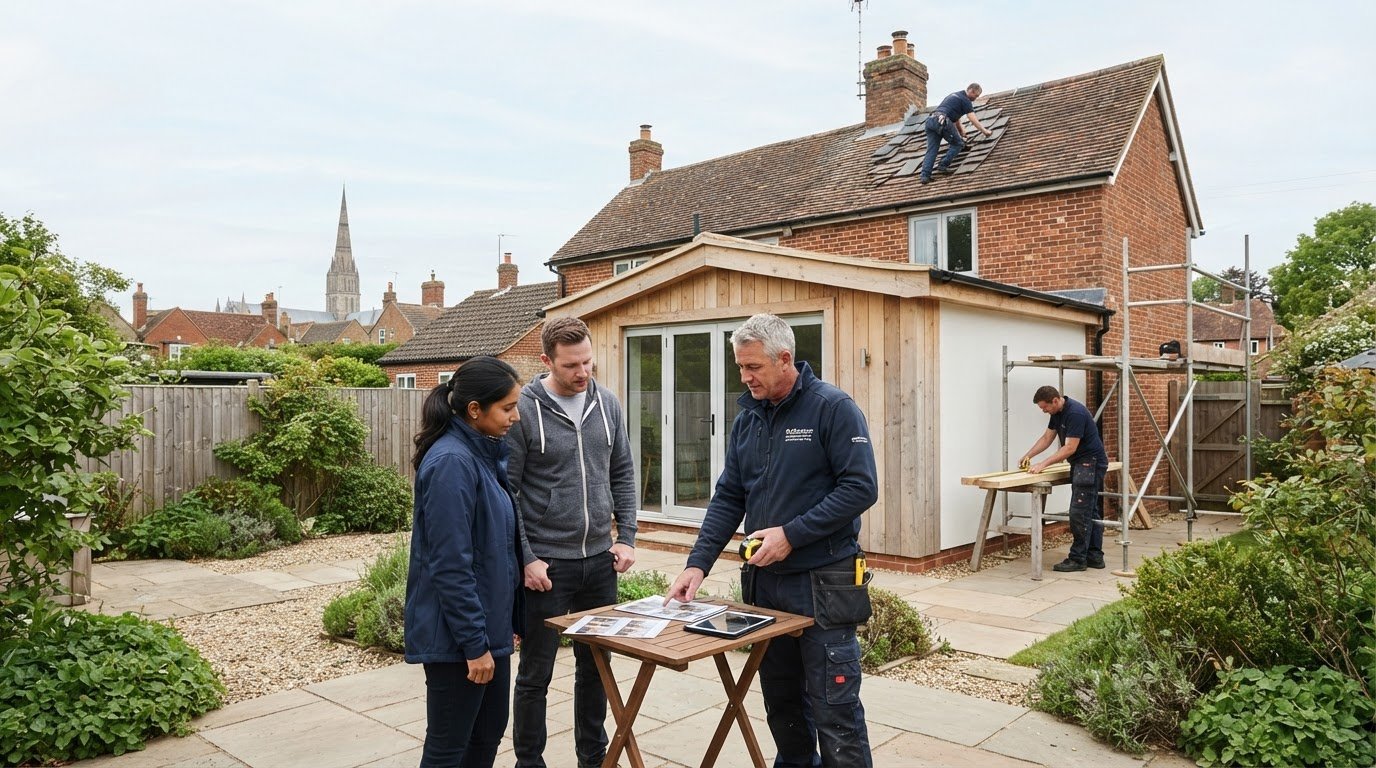
A repair that seems straightforward can sometimes be part of a wider issue in your home. Choosing Britford domestic building and property repair services starts with identifying what you’ve noticed and what you want the work to achieve. It also helps to consider how the work could affect day-to-day life and which building skills the project may involve.
This guide explains how to distinguish between a repair, routine maintenance, an alteration and a larger building project. It also sets out what to prepare before discussing work with DJH Property Services, and how to consider whether a project needs one trade or several related skills.
From roofing, carpentry and bricklaying to home alterations and extensions, the right approach depends on the issue and the property. DJH Property Services is based in Salisbury and carries out residential building and maintenance work for homeowners in Britford. The sections ahead will help you describe the problem, understand the likely scope and consider the next step for your home.
Key Takeaways
- Use the nature and extent of the issue to work out whether your home needs a repair, maintenance or a broader building project.
- Match the work to the right service category, from roofing, carpentry and bricklaying to alterations and extensions.
- Consider how well Britford domestic building and property repair services fit the project, including the scope and skills involved.
- Prepare for a project discussion with photographs, practical measurements and a short list of priorities for your home.
- DJH Property Services is based in Salisbury and carries out residential building and maintenance work in Britford.
Britford domestic building and property repair services: identify what your home needs
A cracked patch of brickwork, a roof showing signs of wear or a room that no longer suits your household can all raise the same question: does the home need a repair, routine maintenance or broader building work? The visible problem is a useful starting point, but it may not show how extensive the work needs to be. Understanding the different types of work helps you describe the issue clearly and identify the right kind of support.
Domestic property repair addresses a fault or deterioration in a home. It may be a specific job, such as repairing damaged brickwork, or one part of wider maintenance. Planned improvements and structural alterations have a different purpose: they change or extend the home rather than simply put a fault right. This distinction can help frame the project discussion, even if the scope changes after the property has been assessed.
Is it maintenance, a repair or a building alteration?
Maintenance is planned work to help keep parts of a home in good condition. Roof upkeep, for example, addresses wear as part of looking after the property. Repair work responds to an existing fault, such as damaged brickwork that needs attention. An alteration changes the home’s layout or structure, such as adapting a room or changing the arrangement of internal space.
Maintenance helps care for the home; repair work addresses a fault; a building project changes or extends the home. This is a practical distinction, not a technical diagnosis. One issue may involve more than one category: a damaged area could need repair, while nearby structure or finishes also need attention. Describe what you can see and how it affects the space rather than deciding the full scope before the work is assessed.
Why Britford homes can have different project needs
Consider the age and condition of the affected area, how it is used and what you want it to do in future. A room being used differently from when it was built may call for an alteration, whilst a worn or damaged element may need repair. The same visible symptom can have different causes, so avoid assuming that a mark, crack or leak tells the whole story. Its location, extent and development over time all help explain the issue.
Homes in Britford and nearby Salisbury vary in age, layout and condition, so the right work depends on the individual property. Looking at the affected area and its surroundings helps distinguish a localised repair from work that may involve other parts of the home. If you’re considering an alteration or building project, the Building regulations in the United Kingdom provide a general overview of the regulatory context. Requirements depend on the work and property, so this reference isn’t a substitute for checking applicable guidance.
Matching the issue to the right kind of work is the first step towards a clear project scope. DJH Property Services carries out domestic property maintenance, roofing, carpentry, bricklaying, alterations and construction. These services relate to different repair and building needs. Based in Salisbury, DJH works with Britford homeowners to discuss the property issue and the intended outcome together.
Which domestic building and property repair services suit your project?
The right service depends on what you want the work to achieve. A localised fault may call for a repair, while planned upkeep helps maintain the home over time. If you want to change a room’s layout or add usable space, the work is more likely to need a building-project approach. This distinction helps Britford homeowners explain what they need without trying to diagnose the cause or settle the scope themselves.
| Common need | Relevant service category |
|---|---|
| Maintain parts of the home in good condition | Property maintenance |
| Address a roof fault or deterioration | Roofing or property repair |
| Repair or build with brickwork or timber | Bricklaying or carpentry |
| Change the layout or use of existing space | Home alterations |
| Add space to the home | Home extensions or loft conversions |
When does a home need building work rather than a small repair?
Think about the purpose, scale and effect of the proposed work. If the aim is to put one damaged element right, a repair may be the appropriate starting point. If the work changes how rooms connect, alters the layout or creates additional space, it calls for a project-level discussion. Appearance alone can’t establish whether a condition is structural; the home and the intended work need to be considered together.
Extensions and alterations are planned building projects, not routine maintenance. An extension changes the home’s footprint, while an alteration adapts existing space. For ideas about the considerations involved in adding space, the home extensions guide offers further context. The intended result is as important as the visible starting point.
How skilled trades fit into wider property work
Some projects draw on more than one building skill. Roofing, carpentry and bricklaying can each be part of domestic construction, maintenance or repair, depending on the property and scope. For example, work involving a roof and adjoining timber or masonry may need those elements considered together. The precise work depends on the project rather than following a fixed package.
For planned upkeep, the property maintenance guide explains how ongoing care differs from responding to a fault. Matching the need to the service category is a useful first step when considering Britford domestic building and property repair services. DJH Property Services carries out domestic building and maintenance work from its Salisbury base. Homeowners can learn about DJH Property Services and the work it undertakes.
How to compare domestic building and property repair services in Britford
A useful comparison starts with the work itself, not a headline or a general list of trades. Before comparing approaches, set out the project as clearly as you can: what needs attention, which parts of the home are affected and what outcome you want. Without a shared starting point, it is harder to understand why different work may be proposed.
Project fit matters alongside reputation when choosing building services. Consider whether the work discussed matches the relevant domestic experience and whether the explanation makes sense for your property. For Britford domestic building and property repair services, experience across several trades can be useful when a project involves connected elements, whilst a focused repair may have a narrower scope.
What should a useful project discussion cover?
Explain the issue, the result you want, the rooms or areas involved and any practical constraints you already know about. For example, describe how you use the affected space and whether access or household routines could influence the work. You don’t need to identify the technical cause; clear observations and priorities give the project discussion a sound basis.
Plain-language explanations help establish a shared understanding. Separate what you’ve noticed from what still needs assessment, and clarify the proposed scope before comparing approaches. If a point is unclear, ask for it to be explained in everyday terms. This makes it easier to understand what work is being considered and how it relates to the outcome you want.
DJH Property Services is based in Salisbury and carries out domestic maintenance, alterations and construction. Its local base is relevant to homeowners in Britford planning work on nearby homes. Discussing the specific property and intended result connects the proposed work to your project rather than relying on broad claims alone.
How can you assess workmanship and reliability?
Look for information that relates to the type of work under consideration. Examples of comparable domestic projects, relevant customer feedback and a clear explanation of the proposed approach can help you understand the experience behind the work. A history of roofing work, for instance, is more relevant to a roof issue than a general list of unrelated household tasks.
Use a practical checklist as you consider the information:
- Project understanding: Is the issue and intended outcome reflected accurately in the discussion?
- Relevant skills: Does the experience relate to the work and any connected building elements?
- Scope: Is it clear what the proposed work addresses, and what remains uncertain?
- Communication: Are explanations direct, understandable and responsive to your questions?
- Local context: Does the work relate to domestic properties in the Salisbury area?
Keep notes of the scope and explanations so you can compare like with like. DJH states that it has more than 50 years of industry experience and is based in Salisbury. This provides context for Britford homeowners considering residential building and property maintenance work. Contact DJH Property Services to discuss your project.

How Britford homeowners can prepare for building or repair work
A little preparation can make the first project discussion more useful. You don’t need to diagnose a fault or settle every detail in advance. A clear record of what you’ve noticed, what you hope to achieve and how the space is used gives DJH a practical starting point for discussing the work.
Create a clear brief for your Britford property project
Work through these steps before discussing your project. Keep your notes brief and factual; they’re there to explain the situation, not to decide the technical solution.
- Record the issue. Note what has changed, where it is happening and when you first noticed it. If it has developed over time, describe the changes you’ve observed.
- Take photographs. Capture the affected area from a useful distance and, where safe, closer up. Images can help show the location and visible condition, but they don’t replace an assessment of the property.
- Measure only where practical. Approximate room or opening measurements can help explain the space involved. Don’t climb, move heavy objects or access unsafe areas to collect them.
- Set out your priorities. Separate the work you consider essential from optional improvements. For example, distinguish addressing a fault from updating the room’s appearance at the same time.
- Describe how the space is used. Note household routines, access considerations and any practical constraints that may affect how the work is approached.
- Explain the intended outcome. Say what you want the area or home to do once the work is complete. This helps frame the discussion around the result as well as the visible issue.
Understand approvals and practical arrangements
Planning and building control requirements depend on the proposed work and the property. Don’t assume that every repair needs the same approvals, or that a project is exempt because it appears modest. For current, location-specific planning information, consult Wiltshire Council’s guidance. For building control, check the relevant current guidance for the work being considered. Requirements can vary, so general advice should not be treated as a decision about an individual home.
For an extension or alteration, include the construction work and intended changes in the project discussion. Design and approval considerations are separate matters to understand alongside the building work. Keeping these questions distinct helps establish what you want built and what information you may need to resolve before proceeding.
Bring your notes, photographs and priorities together when discussing Britford domestic building and property repair services. DJH Property Services is based in Salisbury and carries out domestic building, alterations and maintenance work. A clear brief gives the discussion a sound starting point, whether you’re considering a specific repair or a broader project. Discuss your building or repair project with DJH.
Discuss your Britford building or repair project with DJH Property Services
Once you’ve identified the kind of work your home may need, the next step is to discuss the property and the result you want. DJH Property Services is a Salisbury-based residential building and property maintenance business. Its work includes home extensions, alterations, construction, roofing, carpentry, bricklaying and maintenance. These services cover different Britford domestic building and property repair needs, from addressing a specific property issue to planning a wider improvement.
A local team for building, alterations and repairs
Planned improvements call for a considered building approach. Home extensions add space, whilst alterations adapt the existing home. DJH carries out domestic construction work for these project types, with the intended use of the property helping shape the discussion about the work.
For ongoing upkeep or work on specific parts of a home, DJH provides property maintenance, roofing, carpentry and bricklaying. The skills involved depend on the property and project scope. Where work touches more than one element, experience across related trades helps bring those parts into the project discussion without assuming every job requires the same work.
DJH is based in Salisbury and states that its industry experience spans more than 50 years. That background gives Britford homeowners context when considering a local business for domestic building or maintenance. For broader guidance on the company’s construction work in the area, the Salisbury construction contractor guide is a related read.
What to include when you get in touch
A concise first description is enough to start a useful conversation. Share the property’s location in Britford, what you’ve noticed and which part of the home is affected. Then describe the outcome you’re hoping for, whether that’s putting a fault right, improving an existing room or making space for a different use.
Photographs can help illustrate the area and its visible condition. You can also mention practical details that may shape the discussion, such as access, household routines or measurements you’ve taken safely. You don’t need to diagnose the cause or settle the full scope in advance; clear observations and priorities are a sound starting point.
DJH Property Services is based in Salisbury and carries out residential building, alterations and maintenance work for homeowners in Britford. Discuss your home building or repair project with DJH.
Take the next step towards a clearer project plan
You don’t need to have every detail settled before beginning a conversation. Explain what you’ve noticed, what you’d like your home to achieve and which points remain uncertain. That gives the discussion room to develop as the property and the work are considered, rather than locking you into an assumption too early.
Choosing Britford domestic building and property repair services is about finding an approach that fits your home and the outcome you have in mind. Bring your notes or photographs if they help, and focus on the questions you want resolved. A straightforward discussion can help turn an initial concern into a clearer project plan.
Start a conversation about your Britford home project with DJH Property Services. A clear account of your needs is a sound place to begin.
Frequently Asked Questions
Do I need planning permission for building work on a home in Britford?
Not all building work requires planning permission, but whether it applies depends on the proposed work and the property. Planning permission and building control are separate considerations, so don’t assume that addressing one means the other is covered. For a home in Britford, consult Wiltshire Council’s current planning guidance and seek project-specific advice before work begins. The property and details of the proposal can affect what needs to be considered.
Can one contractor handle both building work and property repairs?
Yes. DJH Property Services carries out residential construction, alterations and property maintenance, alongside roofing, carpentry and bricklaying. This range can be useful if a project involves connected tasks rather than one isolated trade. For Britford domestic building and property repair services, the key is to match the relevant experience to the actual scope of your home project.
How do I know whether a crack needs a building repair?
You can’t reliably diagnose a crack from its appearance alone. Note where it is, when you first saw it and whether it appears to be changing; dated photographs can help record this. Mention any other changes you’ve noticed nearby, such as a door or window becoming harder to open. These details don’t establish the cause, but they give DJH useful context when assessing whether repair work is appropriate.
What information should I provide when discussing a home repair project?
Share the property location, the affected area and what you want the work to achieve. It can also help to mention any previous repair attempts, relevant paperwork or plans you have, and whether there are particular finishes or household arrangements to consider. You don’t need technical terminology. A straightforward description, supported by clear photographs, gives DJH a useful basis for discussing the work.
Can property repairs and improvement work be planned together?
They can be discussed as part of one project, provided the essential repair and optional improvement are clearly distinguished. For example, you might want to address a fault in a room whilst also considering a change to how the space is used. Set out which outcome matters most and which changes are preferences. This helps define a scope that accounts for the different aims and considers a sensible sequence for the work.
Does a home extension always need building control approval?
Don’t assume that every extension has the same approval requirements. Building control considerations depend on the details of the work and the property, and are separate from planning permission. Check current guidance for your proposal before proceeding, including relevant information from Wiltshire Council or the appropriate building control service. A general answer cannot determine the requirements for an individual home, so base your next steps on the specific extension being considered.
How can I keep building work organised whilst living in my home?
Agree how the work area will affect everyday use of the house before the project starts. Identify rooms or facilities that need to remain accessible, discuss where access is practical and move belongings away from the area where work is planned. Keep project notes and decisions together, and raise changes in priorities promptly. Clear arrangements help everyone understand the household’s needs whilst the building work is under way.