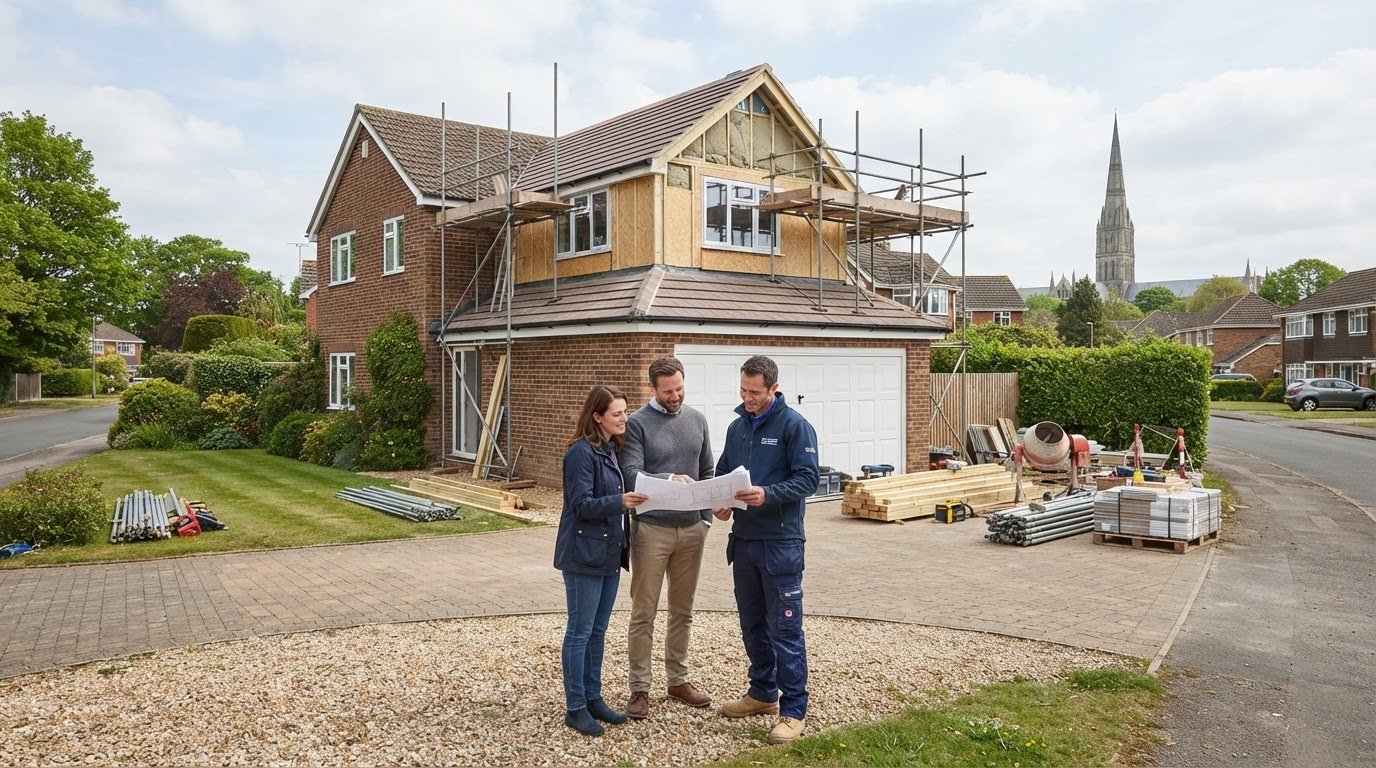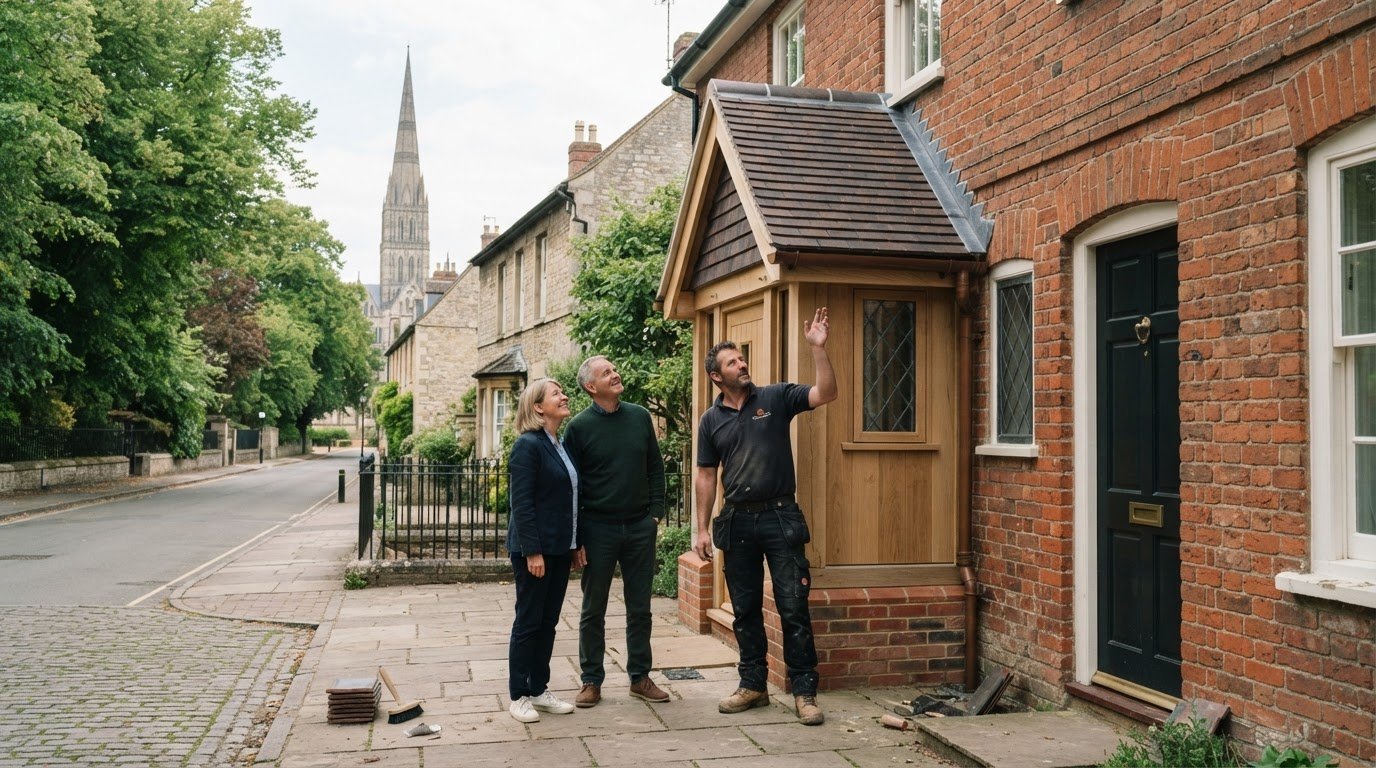
Removing a load-bearing wall generally requires Building Control approval in England, so a knock-through is more than a demolition decision. In Salisbury, Wiltshire Council handles building control. Appraising a structural wall before a knock-through in Salisbury starts with establishing what the wall supports and where those loads will go. An assessment can also identify whether beam design, temporary support or party wall requirements need attention before work begins.
It’s easy to focus on the new opening and overlook the structure around it. Misjudged loads, inadequate beam bearings and removing masonry before supporting the structure above can all cause problems. This guide explains what a structural appraisal covers, how it informs approval and party wall considerations, and which risks to address before work starts. A clear assessment also helps shape the next steps for a well-planned alteration.
Key Takeaways
- A proper appraisal looks beyond the wall itself, tracing loads from floors and roofs through the proposed support points down to the ground.
- Plans for a shared-wall opening may need party wall notice before work begins, so allow for this alongside building control approval.
- Temporary support must be in place before masonry is removed, and the installed beam should be inspected before it is concealed.
- Recognising warning signs such as recurring cracks or deteriorated mortar can help distinguish existing structural concerns from risks created by the alteration.
- Clear structural calculations and drawings give the builder and building control a defined specification to work from.
Survey and structural appraisal of the existing building
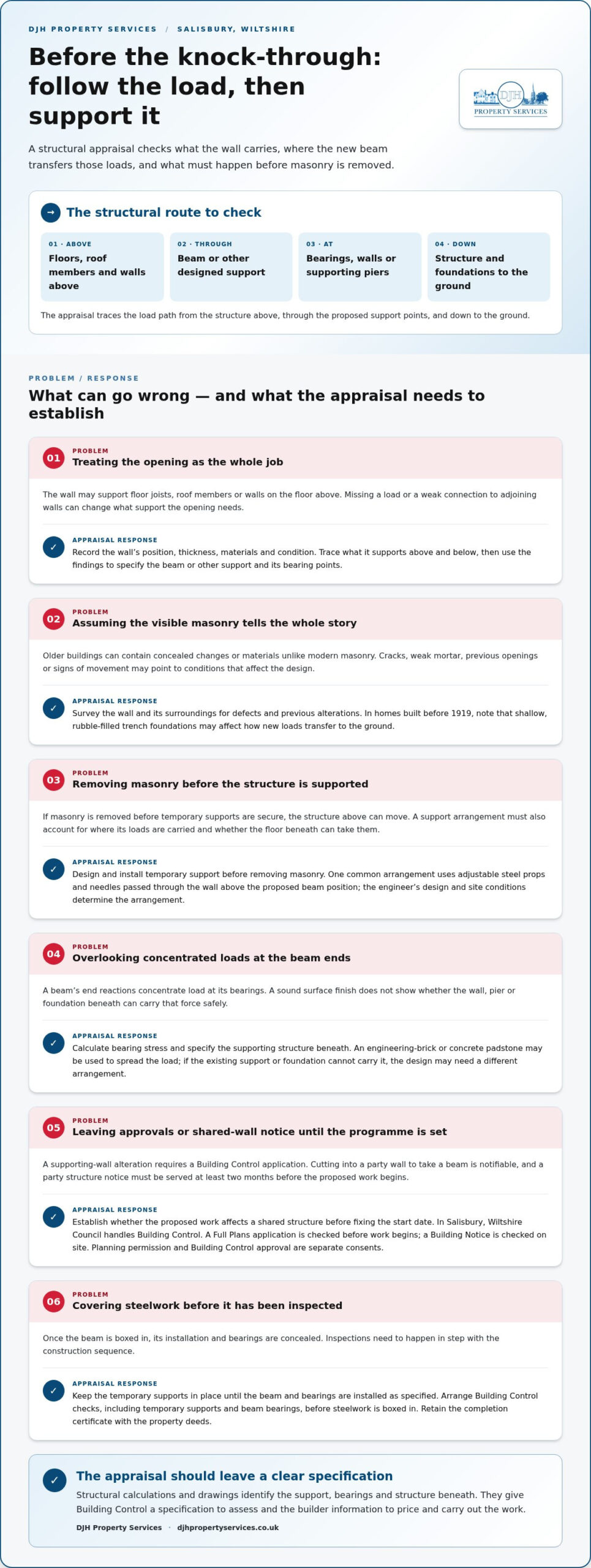
The appraisal begins with a survey of the existing building, not just a measurement of the proposed opening. An engineer records the wall’s position, thickness, materials and condition, then traces what it supports above and below. Floor joists, roof members and walls on the floor above can all affect the design. This inspection helps distinguish a straightforward opening from work requiring additional support or investigation.
Construction methods matter in Salisbury, where older buildings may contain concealed changes or materials unlike modern masonry. Homes built before 1919 often have shallow, rubble-filled trench foundations, which can affect how new loads transfer to the ground. The survey should note cracks, weak mortar, previous openings and signs of movement. For example, a wall that appears solid may have poor connections to adjoining walls or a weakened lintel.
Using these findings, the engineer establishes a safe load path and prepares calculations and structural drawings. The design identifies the beam or other support, its bearing points and the structure beneath. Eurocode calculations with the UK National Annexes are accepted for demonstrating a safe load path to the ground. The documents give Building Control a specification to assess and the builder information to price and carry out the work.
For a supporting-wall alteration, the property owner has a legal duty to apply to Building Control. In Salisbury, Wiltshire Council handles building control. A Full Plans application is checked before work begins; a Building Notice is checked on site. Building Control checks the engineer’s calculations and drawings against the installation, including temporary supports and beam bearings. Steelwork must be inspected before it is boxed in, so inspections need to fit the construction sequence.
Planning permission and Building Control approval are separate consents. Structural work may need Building Control approval even where planning permission is not required. The Building Act 1984 and the Building Regulations 2010 apply to work affecting a building’s structure or safety. Listed buildings generally need listed building consent for most internal changes, so establish the property’s status before fixing the design or starting demolition.
There is no statutory requirement in England to employ a structural engineer for knock-through design, but calculations should be provided before work starts. The practical question is whether the support and load path are properly specified for inspection and construction. Structural engineering and Building Control costs depend on project complexity, the scope of calculations and drawings, and the chosen application route; costs are set out after a quote request.
Keep the survey findings, calculations, drawings and approval documents together as the project progresses. Compare the installed beam and its bearings with the approved specification, and ensure required inspections take place before concealed work is covered. Once the work is complete, retain the Building Control completion certificate with the property deeds. This record helps show how the structural alteration was assessed and approved.
Does this need a party wall notice in Salisbury?
A party wall notice may be needed if the proposed opening involves cutting into a shared wall. Under section 2 of the Party Wall etc Act 1996, cutting into a party wall to take a beam is notifiable. A party structure notice must be served at least two months before the proposed work begins. This means the notice process belongs in the project programme, not after demolition has been arranged.
Work near a shared wall in a semi-detached or terraced Salisbury home may also bring the Party Wall etc. Act into play. The key question is whether the work affects the shared structure, not simply whether it is nearby. For example, forming an opening in an internal wall wholly within your home differs from cutting a beam pocket into a wall shared with a neighbour. Establish the wall’s position and the planned beam bearings before setting a start date.
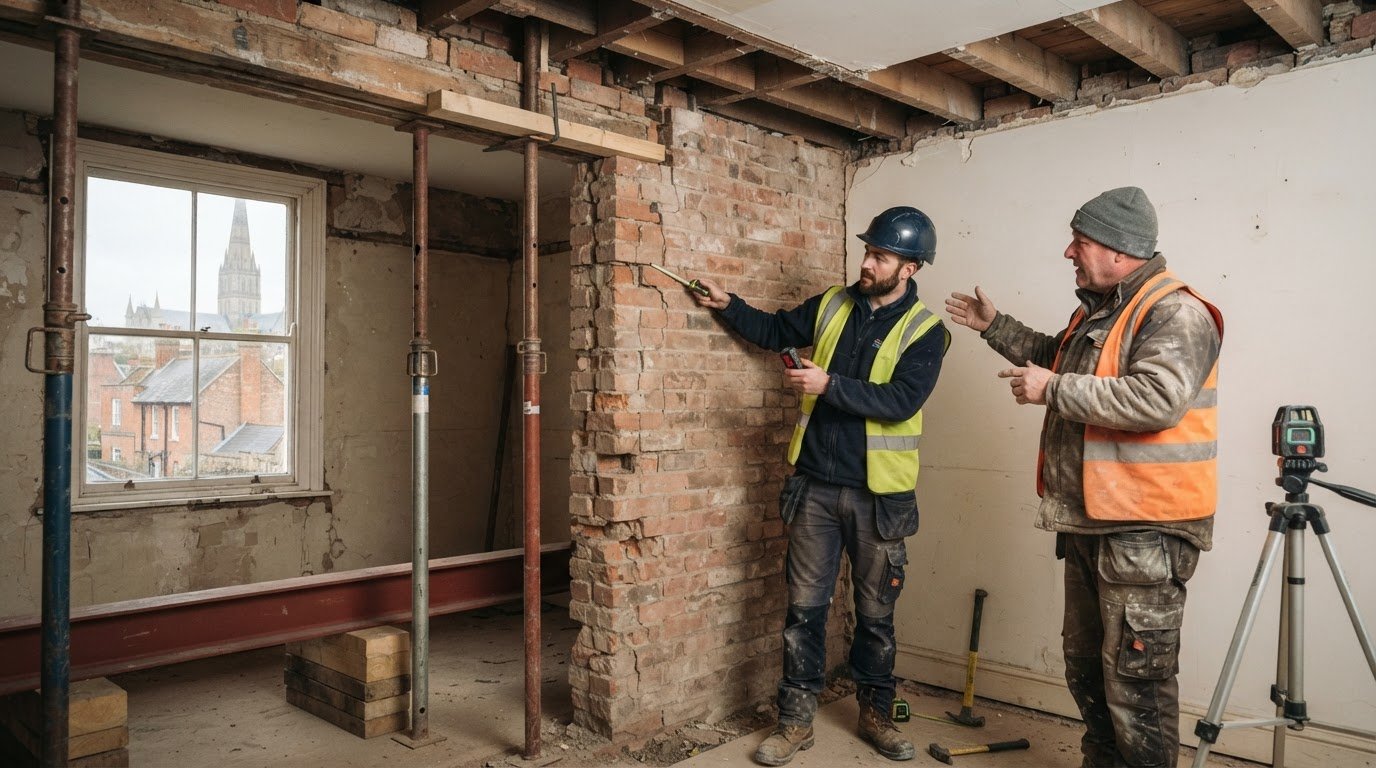
Safe installation starts with supporting the structure above the wall before removing masonry. A common arrangement uses adjustable steel props and needles passed through the wall above the proposed beam position. The engineer’s design and site conditions determine the support arrangement, including where the loads are carried and whether the floor beneath can take them. Removing masonry before the supports are secure can allow the structure to move.
Once the opening is formed, the beam’s end reactions concentrate load at its bearings. The supporting wall or pier must carry that force safely down to the ground. Engineers calculate bearing stress and may specify an engineering-brick or concrete padstone to spread the load. If the existing support or foundation cannot carry it, the design may need a different arrangement. A sound surface finish alone does not show that the structure beneath is adequate.
Chimneys need particular care. Removing a ground-floor chimney breast can leave the stack above without its original support. Proper support for the stack must be designed before the breast is removed; the remaining masonry cannot simply be assumed to be stable. The appraisal should establish what remains above, where its weight transfers and whether the supporting structure below can carry it.
Before work starts, identify joist direction, walls above and any roof purlins or water tanks supported by the wall. Tapping the surface is not a reliable test. During construction, keep temporary supports in place until the beam and its bearings are installed as specified. Building Control inspections include checks on temporary supports and beam bearings, and steelwork should be inspected before it is boxed in.
Where the design calls for a new beam, steel beam installation work should follow the engineer’s specification and the planned inspection sequence. Coordinating notice, support, installation and inspection reduces the risk of disturbing a party wall or leaving a concentrated load inadequately supported.
Working with structural engineers and surveyors
A measured survey gives the structural engineer information about the proposed opening and the building’s existing condition. Its scope should match the purpose of the visit, whether designing a knock-through or investigating visible movement.
Surveys Before Repair Work
A structural survey can help identify the cause and extent of damage before repair work is planned. The surveyor examines features such as cracked brickwork, a weakened lintel, wall connections and signs of movement, then records how they relate to the surrounding structure. This helps distinguish a local defect from a wider structural issue and gives the owner a clearer basis for planning repairs.
Cracks that widen or repeatedly return after filling should be investigated before further cosmetic repairs. A report can describe the observed damage, its likely cause and the repair work indicated by the findings. If subsidence is suspected, monitoring is often recommended over a 12-month period. Recording changes over time can help establish whether movement is continuing before repairs are specified.
Site Visits and Measured Surveys
An initial site visit for a knock-through may involve discussing the owner’s plans, measuring the property and assessing load paths. The structural engineer considers the proposed opening alongside the structure above and below it. Accurate measurements help define the opening, beam position and bearing points. Notes on access and visible construction can also identify details that need further investigation.
A Salisbury structural engineer’s site visit typically takes 2-3 hours. A written structural survey report for a Salisbury property is usually delivered in 5-10 working days after the site visit. Useful preparation includes making the intended opening clear and identifying visible cracks, previous alterations and areas where brickwork or a lintel has deteriorated. These details help the visit address the right question.
Structural Survey Costs in Salisbury
Structural survey costs depend on the work required, not simply the visit. A focused inspection differs from a detailed report investigating movement, while knock-through calculations add design work such as assessing loads, beam size and bearing points. Property access, the extent of measurements and the detail needed in the written report also affect the scope.
The fee depends on the case. The main cost factors are the inspection scope, report detail, access and whether structural calculations are required. Compare the agreed scope with the purpose of the survey: a report investigating recurring cracks should address their cause, while knock-through calculations should specify the proposed support. A clearly defined scope makes the resulting advice more useful.
Identifying load-bearing walls and load paths
A wall’s thickness or the sound it makes when tapped cannot reliably show whether it carries a load. Assessment traces the structure from the roof and floors, through the wall, towards the ground. Check the direction of timber joists, walls aligned above, and whether the wall supports roof purlins or a water tank. Each clue helps establish the load path, but must be considered alongside the building’s construction.
Older Salisbury houses can have altered layouts, concealed supports or masonry built in stages. A wall that appears internal may support joists from both sides, while another may simply divide rooms. In houses from the 19th century or early 20th century, a central spine wall may support the floors. Removing it can require a beam that transfers those loads to suitable supports at each end.
The design must account for more than the beam’s span. A structural engineer calculates the new beam size, bearing points and whether the supporting walls can take concentrated loads. Knock-through beams are typically designed for bending, shear strength, buckling resistance and deflection. A 203 x 102 universal beam is one possible example for a kitchen opening, not a standard selection for every property.
Beam bearings transfer the load into masonry at either end. Typical beam bearings for an internal wall knock-through are at least 100mm on each side, although the required bearing can increase with the load. The engineer calculates bearing stress and checks the material beneath each end. If the masonry cannot safely carry that force, an engineering-brick or concrete padstone may spread it across a larger area.
Lintels need their own assessment. Lintel bearings are commonly specified as 150 mm or more at each end, but the required detail depends on the load and the supporting masonry. A sound-looking lintel may still be weakened or poorly seated. The appraisal should record its condition, bearing surfaces and the brickwork around it, rather than treating an existing lintel as proof that a wider opening is safe.
Part A of the Building Regulations requires a safe load path to the ground. That means checking every link, including the beam, padstone, pier and supporting structure below. A new concentrated load may exceed what an existing pier or foundation can carry. The engineer’s calculations and drawings set out how the proposed support works; Building Control checks those documents against the installed structure.
Use the drawings as the construction reference. They should identify the beam, bearings and any padstones or supporting piers, so the built arrangement matches the calculated design. Timber joist direction, masonry condition and existing openings can change the loads involved. If site conditions differ from the assumptions in the drawings, pause removal and have the design reviewed before changing the support arrangement.
Common structural mistakes during knock-throughs
A common error is assuming a wall is non-load-bearing because it sounds hollow or looks thin. Tapping is not a reliable test, and plaster can hide alterations, lintels or junctions with other walls. Before forming an opening, compare the site condition with the structural drawings. If the masonry, opening position or support arrangement differs, stop and resolve the discrepancy before removing more material.
Another mistake is choosing a beam by span alone. Calculations must account for the loads, beam stability, deflection and the masonry receiving its end reactions. A beam that fits the opening may still impose too much force on a narrow pier or weak brickwork. The engineer’s specification should show the beam, bearings and any padstones, while treating the support beneath each bearing as part of the same load path.
Rushing demolition can disturb the structure above. It must be propped before masonry is removed, using a temporary arrangement positioned to carry loads safely during the work. Removing a section first and adding props afterwards reverses the correct sequence. Props and needles need firm support, and work should proceed in stages that preserve stability until the permanent beam and its bearings are installed.
Concealing steelwork before inspection is a costly sequencing mistake. Building Control inspections include checking temporary supports and beam bearings, and steelwork should be inspected before it is boxed in. Keep the relevant work accessible until the required inspection has taken place. Check the installed beam against the approved calculations and drawings, including its position and bearing details, rather than relying on appearance after plasterboard covers the structure.
Ignoring existing cracks can make it harder to identify the cause of later damage. Photograph cracks before work, note their location and look for changes during the project. Cracks that widen or repeatedly return after filling need investigation before cosmetic repairs. A structural survey can help establish whether movement relates to the proposed opening or an existing issue. Avoid covering cracks with fresh plaster before their condition has been assessed.
Services through the wall create another avoidable risk. Cables, pipes and gas services need rerouting by the appropriate trades before the knock-through is completed. Mark their routes before cutting, then coordinate the diversion with the structural sequence. For shared walls, cutting into a party wall to take a beam is notifiable under section 2 of the Party Wall etc Act 1996. Allow for notice before setting the start date.
Use the appraisal, calculations and inspection sequence as one working plan, not separate paperwork. If you’re preparing a Salisbury opening, discuss your construction and alteration work once the structural requirements are clear.
DJH Property Services: Home Extensions
DJH Property Services can help take a Salisbury knock-through from an assessed plan into the wider building project. Once the structural requirements and approval steps are clear, its Home Alterations and Construction services can form part of the practical changes needed to reshape your home. For larger plans, Home Extensions may also be relevant, while Property Maintenance can address associated work around the property.
Bring the appraisal, drawings and approval details into the project discussion so the proposed work has a clear scope. For a knock-through forming part of a wider renovation, contact DJH Property Services to discuss your building plans.
Plan the next stage with confidence
A knock-through can be the starting point for a wider change to how your home works. Before building begins, bring the structural information together with your plans for the finished space. This gives the project direction and keeps decisions about the opening connected to the rest of the property.
For work that extends beyond the wall itself, DJH Property Services undertakes Home Alterations, Construction and Home Extensions in Salisbury. Discussing the wider scope can help you consider how the knock-through fits your planned improvements. Appraising a structural wall before a knock-through in Salisbury is one step towards a well-planned home project.
Contact DJH Property Services today to discuss your plans and take the next step towards shaping your home.
Frequently Asked Questions
Do You Always Need Building Control Approval?
No, not every internal alteration needs approval, but removing or altering a load-bearing wall generally does. For an alteration to a supporting wall, the property owner has a legal duty to apply to Building Control. Full Plans are checked before work, while a Building Notice is checked on site. Planning permission is separate, so approval for one does not replace the other.
First question: is the wall carrying anything?
Yes. The first structural question is whether the wall supports floors, roof members or another part of the building. Consider what rests on it, including whether joists end above it or continue across. A wall can also provide restraint that helps stabilise adjoining structure. If you’re uncertain, don’t start removing plaster or masonry to test it; arrange an assessment before disturbing the wall.
What is a ‘Knock-Through’?
A knock-through removes some or all of a wall to create a wider opening between spaces, such as a kitchen and dining room. The term describes the building work, not a particular structural method. A non-supporting partition may need a different approach from a wall carrying floor or roof loads. The opening’s width and position help determine the support and approvals the project requires.
How can I tell if a wall is load-bearing before a knock-through?
You can gather clues, but appearance alone cannot confirm a wall’s role. Compare its position with rooms above and below, and look at available building plans for joist layouts or earlier alterations. A wall beneath a structural feature may carry a load even if it appears narrow. Tapping is unreliable. If you’re uncertain, obtain a structural assessment before planning demolition.
Which professional should assess a structural wall in Salisbury: structural engineer or building surveyor?
For appraising a structural wall before a knock-through in Salisbury, a structural engineer assesses load paths and designs supporting beams and bearings. A building surveyor can report on the property’s condition and flag concerns such as cracking or altered construction. If the main question is whether an opening can be formed and how it should be supported, structural calculations are central to the assessment.
What does a structural engineer’s wall assessment and beam calculation cost in Salisbury?
The scope affects the fee: a straightforward opening needs a different assessment from a project involving several supports or uncertain existing construction. Ask for the work to be described clearly, including whether the fee covers the visit, calculations and drawings. These documents provide the design information needed for the proposed beam installation.
What information and site access does a structural engineer need to assess a wall?
Explain the opening you want, its approximate position and how you plan to use the room afterwards. Share existing plans, details of previous alterations and photographs of relevant cracking or exposed structure. Access to the rooms above and below can help the engineer trace how loads pass through the building. If the loft or floor structure is accessible, point out visible joists and supports during the visit.
How do I check whether a wall is shared or subject to the Party Wall Act?
Start by checking property documents and the wall’s position against the adjoining home; a wall between semi-detached or terraced houses may be shared. The Party Wall etc Act 1996 can apply where work affects a shared structure. Cutting into a party wall to take a beam is notifiable under section 2, and a party structure notice must be served at least two months before work begins.