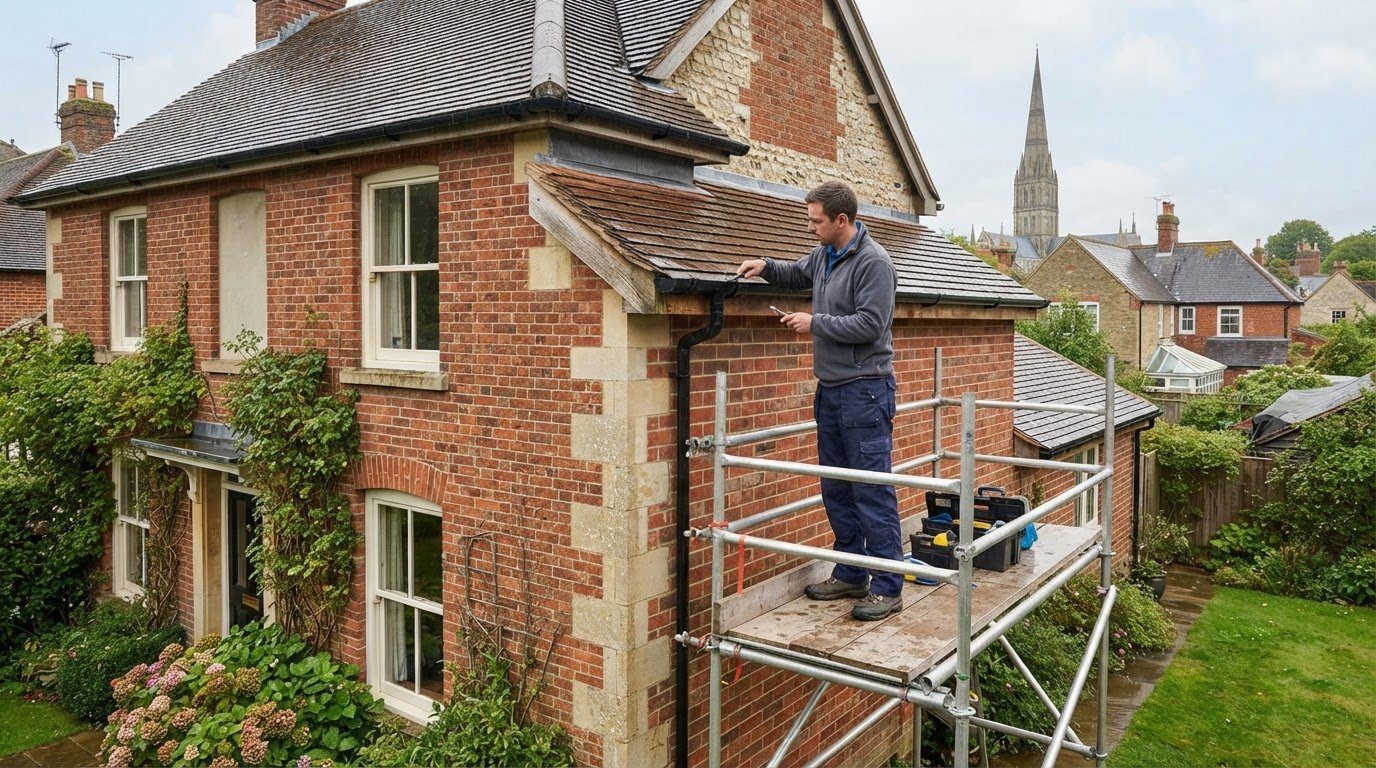
What if recurring damp in an upstairs room begins not with the wall, but with a failing gutter or roofline? This guide to guttering and roofline Salisbury homeowners need starts with that connection: when rainwater isn’t carried away properly, it can reach the fascias, soffits and structure beneath them.
If terms such as “fascia” and “soffit” feel confusing, or you’re wary of a quick cover-up hiding rotten timber, you’re not alone. The right solution depends on what’s happening behind the visible boards. A temporary-looking fix may leave the underlying problem untouched, whilst a careful inspection can help establish whether repair or full replacement makes sense.
Here, you’ll learn what the roofline includes, how guttering problems can contribute to damp, and what signs may point to timber decay. We’ll also explain the choices involved in repairing, capping or replacing roofline components, and what to consider if your home has heritage protections. Salisbury-based DJH Property Services works across residential construction, roofing, property maintenance and carpentry, including structural timber repairs. The aim is a dry, sound home and a roofline that complements its appearance.
Key Takeaways
- Learn what fascias, soffits and gutters do, and why these roofline components matter to Salisbury properties.
- Compare traditional timber with uPVC and consider which material may suit your home’s age and appearance.
- Use a ground-level checklist to spot visible warning signs, then weigh up whether a local repair or wider replacement is more appropriate.
- Discover how guttering and roofline work can be coordinated with an extension to account for its additional roof area.
- Understand why checking behind the visible boards matters, especially where older timber may need attention.
Understanding Roofline and Guttering in Salisbury Properties
Your roofline is the group of boards and drainage components fitted around the edge of the roof. It helps protect the roof structure and exterior walls from rain, while giving the roof a neat finished edge. For Salisbury homes, it’s useful to look beyond appearance: the components work together, and a fault in one can affect the others.
The roof edge is exposed to wind and rain, and water can find its way into gaps where boards, joints or gutters have deteriorated. Behind these outer layers are the timber rafters and roof edges they’re intended to protect. If water reaches and damages the timber, replacing a board alone may not address the underlying problem. Components that are correctly aligned and fixed help direct water away from vulnerable areas and can reduce the risk of avoidable roof repairs.
The Anatomy of a Modern Roofline
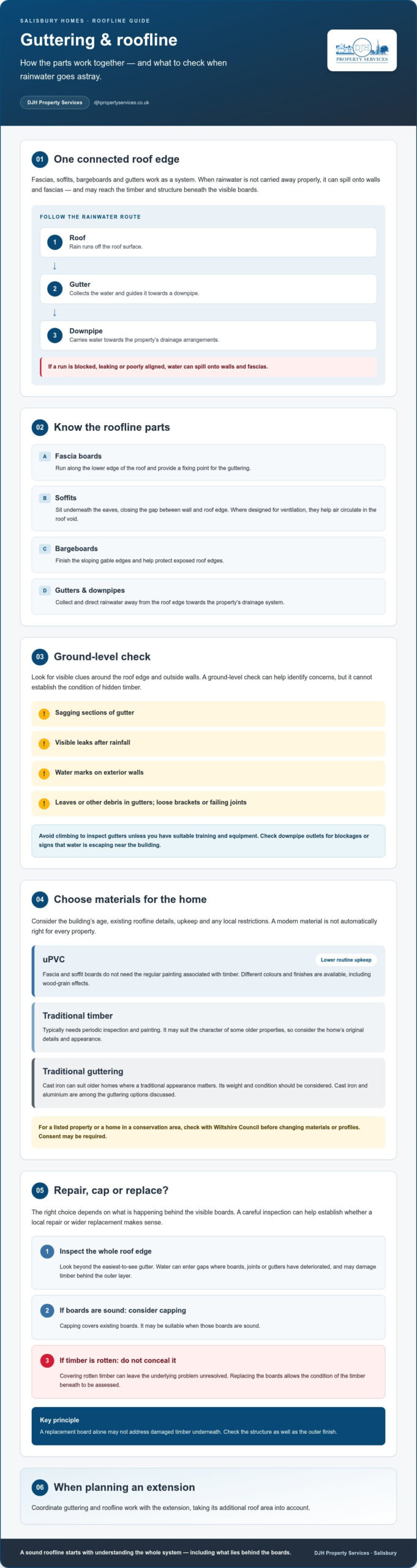
Fascia boards run along the lower edge of the roof and provide a fixing point for the guttering. Soffits sit underneath the eaves, closing the gap between the wall and roof edge. Where designed for ventilation, they help air circulate in the roof void. Bargeboards finish the sloping gable edges. They’re visible features, but also help protect exposed roof edges. Their condition and style matter, particularly on older Salisbury homes.
The Role of Guttering in Effective Drainage
Guttering collects rainwater running off the roof and guides it towards downpipes. Those pipes then carry water to the property’s drainage arrangements. The volume depends on rainfall and roof area, but a blocked, leaking or poorly aligned run can allow water to spill onto walls and fascias. A rain gutter is a component of a water discharge system, rather than an isolated fitting.
Downpipes need to connect appropriately to the drainage system, and their outlets should be checked for blockages or signs that water is escaping near the building. Don’t assume the system will look after itself. Leaves and other debris can obstruct gutters, whilst loose brackets or failing joints may affect water flow. From the ground, look for sagging sections, visible leaks after rainfall or water marks on exterior walls. Avoid climbing to inspect them unless you have suitable training and equipment.
A professional assessment should consider the whole roof edge, not just the gutter that’s easiest to see. DJH Property Services is a Salisbury-based residential construction, roofing and property maintenance contractor. Its carpentry skills are relevant if inspection reveals that timber behind the roofline needs attention, helping homeowners consider the structure as well as the outer finish.
Choosing the Right Materials for Your Salisbury Home
Material choice affects more than appearance. It influences upkeep, how well the roofline suits the building and whether repairs may be needed sooner than expected. uPVC is a common low-maintenance alternative to traditional timber, which typically needs periodic inspection and painting. But a modern material isn’t automatically the right choice for every home. A period property, for instance, may call for a finish that respects its original character.
Consider the building’s age, existing roofline details and any local restrictions before choosing. If your property is listed or in a conservation area, check with Wiltshire Council before changing materials or profiles, as consent may be required. The right approach balances practical performance with a finish that sits comfortably alongside the home’s architecture.
UPVC Fascias and Soffits: The Modern Standard
uPVC fascia and soffit boards don’t need the regular painting associated with timber, making them a practical option for homeowners seeking to reduce routine upkeep. They’re available in different colours and finishes, including wood-grain effects that can complement older properties. Before deciding, compare samples with your windows, doors and existing exterior details. A close match can create a more coherent finish.
There’s also a choice between capping and full replacement. Capping covers existing boards, whereas replacement removes them so the condition of the timber beneath can be assessed. Capping may be suitable when the boards are sound, but it should never conceal rotten timber. If decay is present, covering it can leave the underlying problem unresolved.
Traditional Guttering: Cast Iron and Aluminium
Cast iron can suit older homes where a traditional appearance matters, including some properties in conservation areas. Its weight and condition should be considered, and owners of listed buildings should check consent requirements before work begins. Properly maintained cast iron guttering can have a long service life, though its actual lifespan depends on its condition and upkeep.
Aluminium offers a different balance: it’s durable, recyclable and can provide a clean finish on modern homes. Seamless aluminium guttering has fewer joints along a run, which means fewer potential points for leaks, although correct installation and maintenance remain important. For information about rainwater drainage requirements, consult the Approved Document H building regulations.
There’s no single best material for every property. Compare the existing roofline, likely maintenance needs and the home’s architectural character before settling on a solution. A contractor with construction and carpentry experience can also help identify whether visible damage extends to the timber underneath. To learn more about DJH Property Services’ work in roofing and property maintenance, visit DJH Property Services.
Guttering and Roofline Salisbury: Common Issues in the Area
Roofline problems often begin with small faults: a joint that leaks, a bracket that loosens or leaves collecting in a gutter. Rain and wind put exposed edges under repeated stress, whilst falling leaves and twigs can obstruct gutters, particularly where mature trees are close to the house. Once water overflows or escapes through a failed joint, it may soak fascia boards, reach the eaves or run down external walls.
The building’s age can shape what happens next. A Victorian terrace may have older timber and masonry details that need careful assessment, whereas a modern home may use different roofline materials and construction. In either case, water entering behind the visible finish can cause damage that isn’t obvious from the ground.
Damp and Structural Rot: The Silent Killers
Look for sagging or detached gutter sections, water spilling over the edge, peeling paint, stained walls and damp patches near the eaves. Inside, musty smells, mould or condensation in the loft can signal a moisture or ventilation problem. Damaged or poorly ventilated soffits may contribute to condensation, but these signs can have other causes too, so don’t assume the gutter is solely to blame.
Persistent water ingress can decay timber around the eaves. What begins as a leak may eventually require carpentry to assess and repair affected boards or rafters, rather than simply covering the surface. Water running down masonry can also damage mortar or brickwork over time. Where bricks have deteriorated, repair may call for a bricklayer as well as attention to the original source of the water. This whole-building perspective helps avoid a temporary fix that leaves structural damage concealed.
Foundation Risks and Ground Drainage
An overflowing downpipe can concentrate rainwater beside the house instead of directing it towards suitable drainage. Repeated saturation may affect the ground near foundations, although the risk depends on the site, soil and building. Water can also wash over garden walls or patios, leaving persistent damp, staining or erosion. Check that downpipe outlets aren’t blocked and that water isn’t routinely pooling beside the property.
Good upkeep means tracing water from the roof edge to where it leaves the building. For broader guidance on protecting your home, see this guide to property maintenance in Salisbury. A local contractor with roofing, carpentry and bricklaying experience can assess connected issues rather than treating a blocked gutter, damp timber and damaged masonry as unrelated faults. That joined-up approach is particularly useful for older Salisbury homes, where the visible roofline may be only one part of the repair.
Maintenance vs. Replacement: Making the Right Call
A loose bracket or leaking joint doesn’t always mean the whole roofline needs replacing. If the boards are sound and the fault is localised, a repair may restore effective drainage. But widespread cracking, sagging, recurring leaks or rotten timber behind the visible finish can point to a larger problem. Covering decayed boards won’t remove the cause, so a thorough assessment matters before choosing between repair and replacement.
A Five-Step Roofline Check From the Ground
Inspect from a safe position on the ground. Don’t climb a ladder or lean out of an upstairs window to get a closer look.
- Look along the gutter line: Check for sagging sections, gaps and brackets that appear loose or missing.
- Check joints and corners: Look for visible drips or staining around connections, especially after rain.
- Observe during rainfall: From shelter, see whether water flows through the gutter or spills over its edge.
- Examine fascias and walls: Dark streaks, sometimes called “tiger stripes”, or water marks can indicate repeated overflow or leakage.
- Look at the ground: Note pooling near downpipes or water running down walls rather than towards the drainage outlet.
A blocked downpipe may make a gurgling or splashing sound as water struggles to pass through it.
Repair, Replace or Seek Professional Advice?
A secure gutter with one failed joint or bracket may need only a local repair, provided the surrounding sections and supporting boards remain sound. Full replacement is more likely to be the durable option when damage is extensive, components repeatedly fail, or inspection reveals rot beneath the surface. With older homes, consider whether timber repairs are needed too. Otherwise, new outer boards could conceal a problem that continues to worsen.
“Doing it once and doing it right” means addressing the cause, not simply the visible symptom. A contractor with construction experience may be better placed to assess roofline components alongside affected rafters or other structural timber. Before appointing any contractor, ask what insurance they hold, what written terms or guarantees apply to the proposed work, and how waste will be handled. Don’t assume these details; request clear answers.
Local knowledge also helps, particularly if your home is listed or in a conservation area. Ask what checks may be needed and confirm requirements with Wiltshire Council before work begins. For considered advice on guttering and roofline Salisbury homeowners can connect to wider building repairs, speak with DJH Property Services about roofing and property maintenance. The Salisbury-based contractor brings more than 50 years of industry experience, including roofing and carpentry.
Integrating Roofline with Home Extensions and Renovations
A home extension changes more than the floor plan. A new roof adds surface area that sheds rainwater, so guttering and downpipe arrangements should be considered alongside the extension’s roof shape and connection to the existing house. Planning these details early can help avoid awkward joins, poorly directed runoff or a roofline that looks like an afterthought.
If you’re considering home extensions in Salisbury, include the roof edge and drainage in discussions from the outset. The system needs to suit the new roof area and direct water towards appropriate drainage. The finished boards, gutter profile and colour should also sit comfortably beside the original property, particularly where an older house has distinctive detailing.
Roofline Considerations for Home Alterations
Changes to the structure can affect how roof sections meet and where rainwater flows. Removing a load-bearing wall or altering a roof pitch may form part of wider building work, so the support, roof junctions and drainage should be considered as one coordinated project. Complex joins often call for skilled carpentry to connect old and new timber accurately and provide a sound base for the roofline finish.
For example, in a hypothetical Victorian house extension, a sympathetic approach might consider the original fascia proportions and gutter profile before selecting matching or complementary components. That illustrates a design principle, not a record of a completed DJH project. On a real property, the appropriate materials and details depend on its condition, character and any relevant planning or conservation requirements.
The DJH Approach: Structural Integrity First
Roofline work is part of the building envelope, not simply a matter of fitting new plastic boards. If work exposes rotten rafters or damaged supporting timber, carpentry skills can help address the structure before the finish goes on. Bricklaying experience is also relevant where an extension involves changes to masonry or where water damage needs to be assessed as part of the wider project.
DJH Property Services is a Salisbury-based residential construction, roofing and property maintenance contractor. Its building background supports a joined-up view of how the roofline connects to the extension and existing home. This can help homeowners plan practical protection whilst taking care to respect the property’s character. For a project involving guttering and roofline Salisbury homeowners should consider how drainage, structure and appearance work together.
Discuss your extension or renovation requirements with DJH Property Services as part of planning the wider construction work.
Protect Your Home With a Thoughtful Roofline Plan
A sound roofline does more than finish the edge of your roof. Well-maintained gutters help direct rainwater away from walls, whilst fascias, soffits and the timber behind them all play a part in protecting the structure. Regular checks can reveal early signs of trouble, and understanding the difference between local damage and widespread decay helps you make a more informed repair or replacement decision.
Material choices should suit your home’s age and character, and any extension should account for the additional roof area, drainage and the appearance of the original building. Taking a whole-building view can help prevent a surface repair from overlooking a deeper issue.
For advice on guttering and roofline in Salisbury, consider a local contractor with a strong understanding of construction and roofing. DJH Property Services brings roofing, property maintenance and building experience to residential projects in the area.
Ready to discuss your home’s roofline or related building work? Contact DJH Property Services to discuss your requirements. A clear assessment is a practical first step towards a drier, well-protected home.
Frequently Asked Questions
How much does it cost to replace fascias, soffits, and guttering in Salisbury?
The cost depends on the length and condition of the roofline, access to the eaves, chosen materials and whether damaged timber needs repair. A quote should clarify whether it includes removing old components, replacing fascias and soffits, fitting gutters and downpipes, and dealing with any underlying structural issues. Compare the work specified, not just the headline figure, and ask for a clear written breakdown before deciding.
How long does a full roofline replacement typically take for a semi-detached house?
There isn’t a reliable fixed timescale for every semi-detached house. The duration depends on the property’s size, access, roofline condition, weather and whether hidden timber damage needs attention. A straightforward replacement may differ considerably from work involving rotten boards or rafters. Ask the contractor to assess the home and explain the expected schedule, including how they’ll handle any additional repairs discovered once the existing roofline is removed.
Can I install uPVC roofline over my existing wooden boards?
uPVC can sometimes be fitted as capping over existing boards, but only if the timber beneath is sound. Covering rotten or damp wood can conceal ongoing decay rather than resolve it. The condition of the boards should be checked before choosing this approach. If they’re damaged, full removal and replacement may be more appropriate, with any affected timber assessed and repaired before new roofline components are fitted.
Do I need planning permission to change my guttering in a Salisbury conservation area?
You may need planning permission, as conservation areas have tighter controls over changes that could affect a property’s character or appearance. Requirements can depend on the proposed work and the building. Before changing gutter profiles, materials or other visible details, contact Wiltshire Council to check what applies to your Salisbury property. If it’s also listed, seek advice about Listed Building Consent, as separate controls may apply.
How often should I have my gutters cleaned and inspected in Wiltshire?
There isn’t a single inspection schedule that suits every home. Trees near the roof, visible debris, previous blockages and how quickly water drains all affect how often attention may be needed. Check gutters from the ground for sagging, overflow, staining or plants growing in the channel, especially after heavy leaf fall or storms. Don’t climb to clear them without suitable equipment and experience; arrange a safe inspection if access is difficult.
What is the difference between a fascia and a soffit?
A fascia is the board fixed along the lower edge of the roof, where guttering is commonly attached. The soffit sits underneath the eaves, spanning the space between the wall and the roof edge. Depending on its design, it can also allow ventilation into the roof void. Both help finish and protect the roof edge, but damage to either can point to moisture or timber issues that need checking.
Will a new roofline help prevent damp in my bedrooms?
A new roofline may help reduce damp if leaking or overflowing gutters are allowing rainwater into the walls or roof edge. It won’t resolve every cause of damp, which can also relate to ventilation, plumbing or other building defects. If damp appears in an upstairs room, have the source investigated rather than assuming replacement is the answer. A proper assessment should check drainage and the roof structure as well as visible boards.
Can DJH Property Services fix rotten rafters during a guttering job?
DJH Property Services offers roofing, construction and carpentry, so its building expertise can address structural timber repairs such as rotten rafters where they’re identified as part of the work. The precise repair needed depends on the damage and should be assessed at the property. As a Salisbury-based contractor, DJH can consider the roofline alongside the supporting structure, rather than treating the gutter as an isolated component.