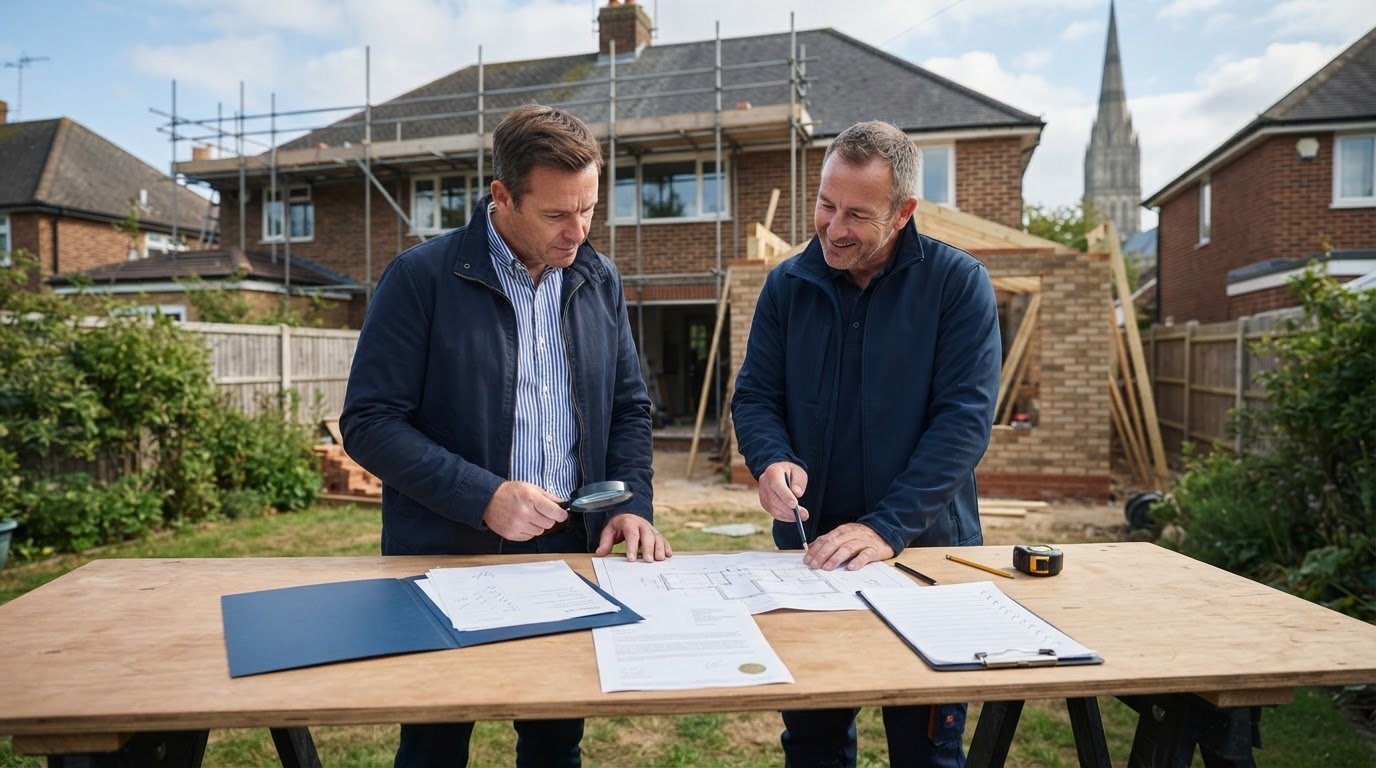
A reassuring conversation and a tidy portfolio are useful, but neither proves a builder is right for your home. The strongest reassurance comes from consistent evidence, clear paperwork and accountable decisions. If you’re unsure how to check a builder in Wiltshire before agreeing to work or paying a deposit, you’re not alone. The avoiding rogue builders checklist Wiltshire homeowners need is about making sensible checks, not treating every small business with suspicion.
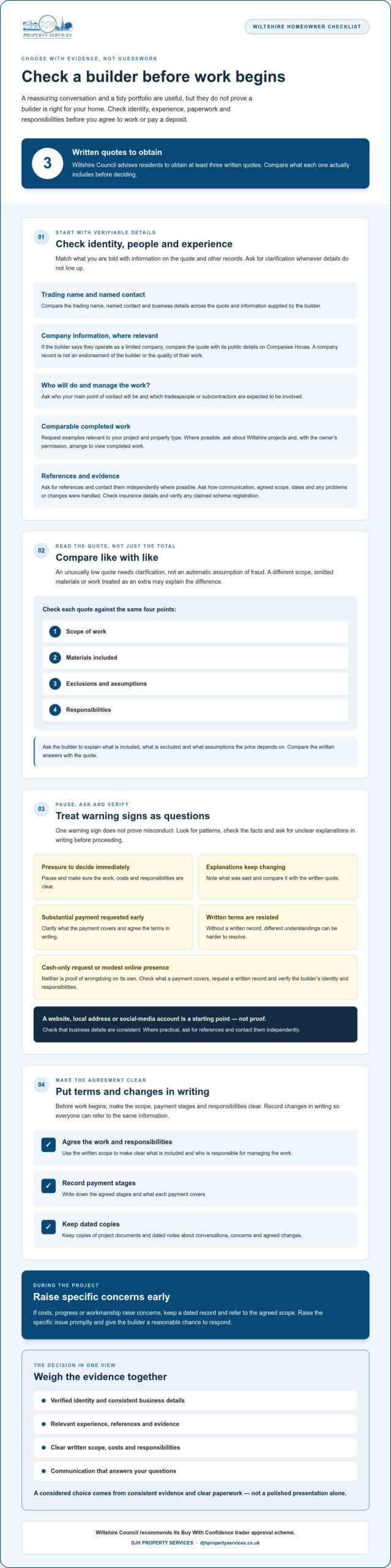
This guide explains how to check a builder’s identity, experience and relevant credentials, then review the quote, contract and payment terms before work begins. You’ll also learn what to monitor during a project and what to do if costs, progress or workmanship raise concerns. Wiltshire Council advises residents to obtain at least three written quotes and recommends its Buy With Confidence trader approval scheme. These checks can help you make a considered decision, whether you’re planning an extension, alteration or another home project.
Key Takeaways
- Use the avoiding rogue builders checklist Wiltshire homeowners can follow to compare a builder’s identity, work history and insurance details.
- Treat warning signs as reasons to ask questions and check evidence, not as proof of misconduct on their own.
- Compare written quotes by scope, materials, exclusions and responsibilities, then record payment stages and changes in writing.
- Keep dated copies of project documents and raise specific concerns promptly, giving the builder a reasonable chance to respond.
- Make your decision by weighing evidence, clear communication, written scope and relevant experience together.
Avoiding rogue builders in Wiltshire: warning signs worth checking
Choosing someone to work on your home can feel risky, particularly when a builder’s promises sound convincing but the details are unclear. One warning sign doesn’t prove misconduct. Treat it as a reason to pause, ask questions and check the facts rather than relying on instinct alone. A practical avoiding rogue builders checklist Wiltshire homeowners can use starts with checking how consistently a builder explains the work, costs and responsibilities.
Be cautious if you’re pressed to decide immediately, given changing explanations or asked for substantial payment before the work and terms are clearly set out. A cash-only request isn’t proof of wrongdoing by itself, but you should be able to agree what the payment covers and receive a written record. Reluctance to provide written terms also makes it harder to resolve different understandings later. Note specific statements and compare them with the quote. If they don’t match, ask for an explanation in writing before proceeding.
An unusually low quote needs clarification, not an automatic assumption of fraud. It may reflect a different scope, omitted materials or work treated as an extra. Ask the builder to explain what is included, what is excluded and what assumptions the price depends on. A clear answer makes it easier to compare the quote fairly with others.
Which builder behaviours should prompt further checks?
Look for patterns rather than isolated moments. Repeated pressure, explanations that change without a clear reason, or demands for a large payment before written terms are agreed warrant follow-up. Keep a dated note of what was said and compare it with the written quote. Legitimate negotiation, being a small business or having a modest online presence aren’t, on their own, evidence of wrongdoing.
Why a website or local address is not proof on its own
A polished website, Wiltshire address or active social-media account can be a useful starting point, but none verifies who will take responsibility for the work. Check that the trading name, named contact and business details are consistent across the quote and other records. Where practical, ask for references and contact them independently. Background on issues featured in investigative consumer shows can offer context, but your decision should rest on checks relevant to the contractor you’re considering.
A reassuring presentation cannot replace documented identity and agreed responsibilities. If an answer remains unclear, pause and ask for it in writing before making a commitment.
A Wiltshire builder-checking checklist: verify identity, work and insurance
Use this checklist before accepting a quote or paying a deposit. The aim is to match reassuring claims with details you can verify, rather than relying on a polished website or confident conversation. For broader guidance, see this guide to choosing a reliable construction contractor in Salisbury.
Check the builder’s identity and relevant project experience
- 1. Match the details. Compare the trading name, named contact and business details on the quote with the information the builder gives you elsewhere. Ask for clarification if names or details differ.
- 2. Check company information where relevant. If the builder says they operate as a limited company, look up its public details on Companies House and compare them with the quote. Registration confirms a company record, not an endorsement of the builder or the quality of their work.
- 3. Clarify who will do and manage the work. Ask who your main point of contact will be and which tradespeople or subcontractors are expected to be involved. This helps establish who is responsible for coordinating the project.
- 4. Look for comparable experience. Request examples of completed work similar to your project and property type. Where available, ask about relevant Wiltshire projects. With the owner’s permission, arrange to view completed work rather than treating photographs alone as proof.
Ask for references and insurance evidence
- 5. Speak to recent customers. Ask for references and, where possible, contact them independently. Keep your questions focused: Was communication clear? Did the work broadly follow the agreed scope and dates? How were problems or changes handled?
- 6. Check scheme registration and insurance. If a builder claims TrustMark registration, verify the business through the TrustMark website. Ask what public liability cover applies and request current documentary evidence. Check the policyholder, dates and scope, and consider what cover is appropriate for your project. Don’t assume one policy or level of cover suits every job.
Keep answers and evidence together with the quote so you can compare candidates consistently. These checks form the basis of an avoiding rogue builders checklist Wiltshire homeowners can use before committing. If you’re considering residential construction, an extension or alterations in Salisbury, you can also discuss a suitable project with DJH Property Services.
Wiltshire building quotes, contracts and deposits: what to agree in writing
A clear quote helps you understand what you’re agreeing to and gives you a reference point if plans change. Don’t compare builders by the headline total alone. A lower figure may cover less work, use different materials or leave important tasks outside the quoted scope. Ask each builder to explain their assumptions and exclusions so you can compare like with like.
What a clear building quote and agreement should set out
Before accepting a quote, check that it identifies the builder and describes the work, materials and finish as clearly as the project requires. It should also explain what’s excluded, who is responsible for particular tasks, and how additional work will be priced and approved. For example, if waste removal or making good isn’t included, that should be stated rather than left to assumption.
Ask for a proposed start date and expected completion date, or a clear explanation of how scheduling will work if dates depend on other work or materials. The written agreement should also explain the payment stages and the work or milestone each payment relates to. For complex contracts or a significant dispute, consider independent legal advice before signing or taking further action.
How to assess deposits, staged payments and changing costs
Deposit and payment arrangements vary by project, so there isn’t one percentage that makes every arrangement safe or unsafe. Check whether the amount and purpose are clear, whether the schedule is proportionate to the agreed work, and whether you understand what you’re paying for. Be cautious about vague cash requests, pressure to pay before terms are settled, or changes mentioned only in conversation. Ask for an invoice or written record of any payment.
Agree how variations will be handled before work starts. If the scope, materials or timing need to change, ask for the reason, any cost or schedule impact, and written approval before the extra work proceeds. Keep copies of updated quotes, messages and payment records. Verbal assurances can be remembered differently by each party. A written variation gives everyone the same reference point.
If you’re considering cancellation or relying on a cooling-off period, check current UK consumer-rights guidance for your circumstances before acting. The applicable rules can depend on how and where the agreement was made and the nature of the work. Clear paperwork is a practical foundation for the avoiding rogue builders checklist Wiltshire readers can use, and it can also help prevent misunderstandings with a genuine contractor.
During a Wiltshire building project: document concerns and act early
Even a well-planned project can encounter delays, unfinished tasks or disagreements about workmanship. Keep a clear record as the work progresses. Save dated copies of the quote and agreement, invoices, messages, photographs and written approvals of changes. For photographs, note when they were taken and which part of the work they show. This creates a useful timeline if you need to explain an issue to the builder or seek advice.
A measured response when work or communication goes wrong
A warning sign is a reason to check further, not proof of wrongdoing. A delay, poor-quality work or missed task may need attention, but does not on its own establish deliberate dishonesty. Start by describing the specific issue calmly and referring to the relevant part of the agreement. For example, identify the unfinished item, when you expected it to be completed and any messages or photographs that clarify the position.
Write to the builder with a clear request for a response and a proposed plan for putting matters right, including reasonable timescales. Keep the exchange factual and allow a reasonable opportunity to respond. If you speak by phone or in person, make a dated note afterwards and confirm any agreed next steps in writing.
Don’t automatically withhold payment or end the contract without advice specific to your circumstances. Those steps can have consequences, particularly if the agreement is disputed. If the issue remains unresolved, or the sums or work involved are significant, consider independent legal or construction advice before deciding what to do next.
Wiltshire records and local support routes
Organise your records in date order, including the original quote, later variations, payment evidence and a brief log of conversations or site visits. This makes it easier to explain what was agreed and where events differed from the plan. If you’re concerned you may have been targeted by a rogue trader in Wiltshire, the Citizens Advice consumer helpline is 0808 223 1133, according to Wiltshire guidance. Check current Citizens Advice and Wiltshire Council information for the right route before contacting Trading Standards, as contact arrangements can change.
Citizens Advice and Trading Standards information can help you understand possible next steps, but can’t guarantee a particular outcome. Use the avoiding rogue builders checklist Wiltshire approach throughout: preserve evidence, raise concerns clearly and get tailored advice before making decisions that could affect your agreement.
If you’re planning a residential extension, alteration or other building project in Salisbury, you can discuss your project with DJH Property Services.
Choosing a building contractor in Wiltshire with confidence
Bring your checks together before deciding. Look for consistency across four areas: evidence supporting the builder’s claims, a written scope you understand, clear communication and relevant experience with work like yours. No single detail settles the question. Consider how the evidence fits together, and ask follow-up questions wherever an answer is incomplete or unclear.
Compare builders against the same Wiltshire project requirements
Give each contractor the same project information and ask the same questions. A simple comparison can show where quotes differ, helping you resolve gaps before choosing.
| What to compare | What to record |
|---|---|
| Scope and exclusions | Work included, materials specified and anything left out |
| Evidence | Identity details, relevant examples, references and insurance documents supplied |
| Proposed schedule | Start and expected completion dates, or how timing will be managed |
| Communication | Who will manage the work, how updates will be given and how questions are handled |
Ask each contractor practical questions, such as who will oversee the work and how changes will be agreed. The lowest quote isn’t automatically the best fit if it leaves out materials, tasks or responsibilities included elsewhere. Compare the written scope and assumptions before weighing the totals.
If your plans involve adding space, the Salisbury home extensions guide offers further context for considering an extension project.
When to request a conversation about your home project
A useful conversation gives you the chance to explain what you need and find out whether the contractor’s experience and services are relevant. DJH Property Services is based in Salisbury and works on residential construction projects, including extensions and alterations, as well as bricklaying, carpentry and roofing. Its location and range of trades are relevant points to consider, not proof that it is right for every project. Apply the same checks and questions you would use with any candidate.
Use the avoiding rogue builders checklist Wiltshire approach to make a considered decision: weigh evidence, written scope, communication and relevant experience together. If you’re planning suitable residential work, you can discuss your building project with DJH Property Services and ask whether its services match your requirements.
Make your next building decision with confidence
A sound choice takes more than a reassuring first impression. Check the builder’s identity and relevant experience, compare written quotes by scope and exclusions, and agree payment stages and changes in writing. If concerns arise during the work, keep a dated record and raise specific issues promptly.
Use the avoiding rogue builders checklist Wiltshire to compare contractors consistently, ask follow-up questions and make a decision based on evidence rather than pressure. A clear process helps you move forward with greater confidence, whether you’re planning an extension, alteration or another home project.
DJH Property Services is a Salisbury-based residential building contractor offering home extensions, alterations and skilled building trades. If you’re considering a suitable project, discuss your home building project with DJH Property Services. Take your time, ask the right questions and choose the contractor whose experience and written plans fit your needs.
Frequently Asked Questions
How can I check whether a builder in Wiltshire is genuine?
Check that the trading name, named contact and business details are consistent across the quote and other records. Ask who will manage the work, request examples of comparable projects and speak to recent customers where possible. Ask for current insurance evidence and verify any claimed trade-scheme registration independently. For a Salisbury project, compare several contractors using the same questions. No single check proves reliability, but consistent, verifiable information gives you a firmer basis for deciding.
What are the warning signs of a rogue builder?
Pressure to agree immediately, unclear contact or business details, cash-only demands without a proper record, and reluctance to provide written terms should prompt further checks. Be wary of explanations that keep changing or substantial payment requests before the scope and terms are clear. An unusually low quote needs clarification about what it includes and excludes. These are reasons to pause and verify claims, not proof of wrongdoing on their own.
Should I pay a deposit to a builder before work starts?
A deposit isn’t automatically unsafe, but its purpose and terms should be clear before you pay. Agree in writing what it covers, when further payments are due and how each stage relates to the work. Keep an invoice or other payment record. There’s no mandatory government-backed scheme protecting homeowners’ deposits for building work, so don’t assume a deposit is protected. If you feel pressured or the terms are vague, pause and seek clarification.
What should a builder’s written quote include?
A useful quote identifies the builder and describes the work, specified materials and finish, exclusions, and responsibilities for tasks such as waste removal. It should set out assumptions, proposed start and expected completion dates, or explain how scheduling will be managed. Check how extra work will be priced and approved, and ensure payment stages are recorded. Compare quotes by scope and responsibilities, not just the total, so you can identify differences before agreeing.
Can I check a UK builder on Companies House?
Yes. If the builder says they operate as a limited company, you can search Companies House for its public details and compare these with the quote. Check that the company name and other identifying information match what you’ve been given. Not every builder operates as a limited company, and a Companies House listing is not an endorsement of workmanship, reliability or financial standing. Treat it as one identity check alongside references, written terms and project evidence.
What should I do if a builder stops responding or leaves work unfinished?
Gather your dated quote, agreement, invoices, messages, photographs and records of approved changes. Write to the builder with a specific description of the unfinished work or concern, refer to the agreed terms and request a written response or plan. Allow a reasonable opportunity for them to reply. Avoid withholding payment or ending the contract without advice suited to your situation. If the matter remains unresolved, Citizens Advice can explain possible next steps.
Is a builder required to have insurance in the UK?
UK building firms with employees must have employers’ liability insurance, with a minimum cover of £5 million, according to current UK requirements. Public liability insurance is not generally a legal requirement, though a contract or project may require it. Ask what cover applies and request current documents, checking the policyholder, dates and scope. Consider what protection your particular project needs rather than assuming one policy or cover level suits every builder or job.