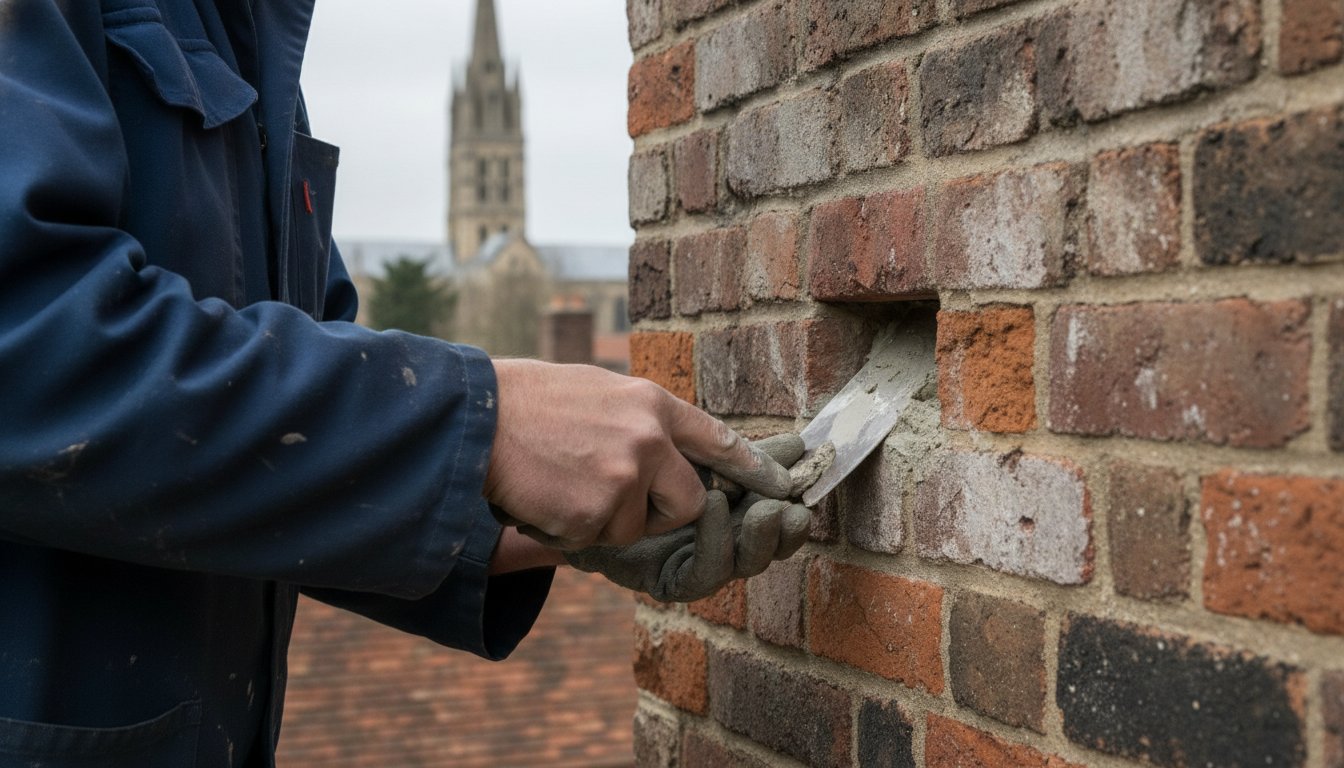
The very modern materials designed to protect a new-build home might be the exact thing that’s slowly destroying your historic residence. Whilst modern construction relies on sealed barriers, Salisbury’s heritage buildings were designed to breathe, and using the wrong techniques can lead to trapped moisture and crumbling masonry. If you feel a sense of trepidation when looking for a tradesman, you aren’t alone. Many homeowners worry that “cowboy builders” using modern cement instead of traditional lime mortar will cause irreversible damage to their home’s character. We understand that managing period property maintenance Salisbury requires a delicate balance of technical skill and respect for local history.
You deserve the peace of mind that comes from knowing your home is in experienced, capable hands. In this guide, you’ll learn how to preserve the structural integrity and historical charm of your property using specialist maintenance techniques that align with Wiltshire Council’s conservation standards. We will provide a clear overview of essential seasonal tasks, explain the critical role of traditional materials like lime and timber, and help you ensure your home remains dry, sound, and beautiful for decades to come.
Key Takeaways
- Shift your mindset from reactive repairs to a preventative strategy that respects the unique architectural history of Salisbury’s timber and brickwork.
- Learn to distinguish between different types of dampness and discover how to protect essential timber elements from rot without compromising the building’s ability to breathe.
- Navigate the complexities of local conservation areas and understand when you need formal consent for your period property maintenance Salisbury.
- Follow a structured seasonal framework to identify and address external masonry and roofing issues before they escalate into costly structural problems.
- Gain the confidence to maintain your home’s value by using traditional materials and techniques that align with heritage standards and local building stock.
Understanding the Heritage of Salisbury’s Period Properties
Effective period property maintenance Salisbury is a preventative strategy, not a series of emergency fixes. In a city where the building stock spans over eight centuries, a reactive approach often leads to invasive and costly interventions. True heritage care requires a seasoned understanding of how these structures were originally designed to function. It’s about stewarding a legacy whilst ensuring the building remains a practical, dry, and comfortable home for modern life.
The Evolution of Salisbury’s Domestic Architecture
Salisbury’s streets are a living record of the History of Salisbury. The city centre is renowned for its grand Georgian townhouses, characterised by their symmetrical facades and elegant sash windows. As the city grew, Victorian and Edwardian terraces expanded into areas like Harnham and Bemerton, introducing red brickwork and decorative timber gables. Each era brought its own technical requirements and material palettes. You’ll often find intricate flint-work, sometimes knapped to a smooth finish, alongside soft, handmade bricks that define our local streetscape. Identifying whether your home rests on a medieval timber frame or a solid Victorian brick wall is the first step in ensuring its longevity.
Why Traditional Materials Matter for Structural Health
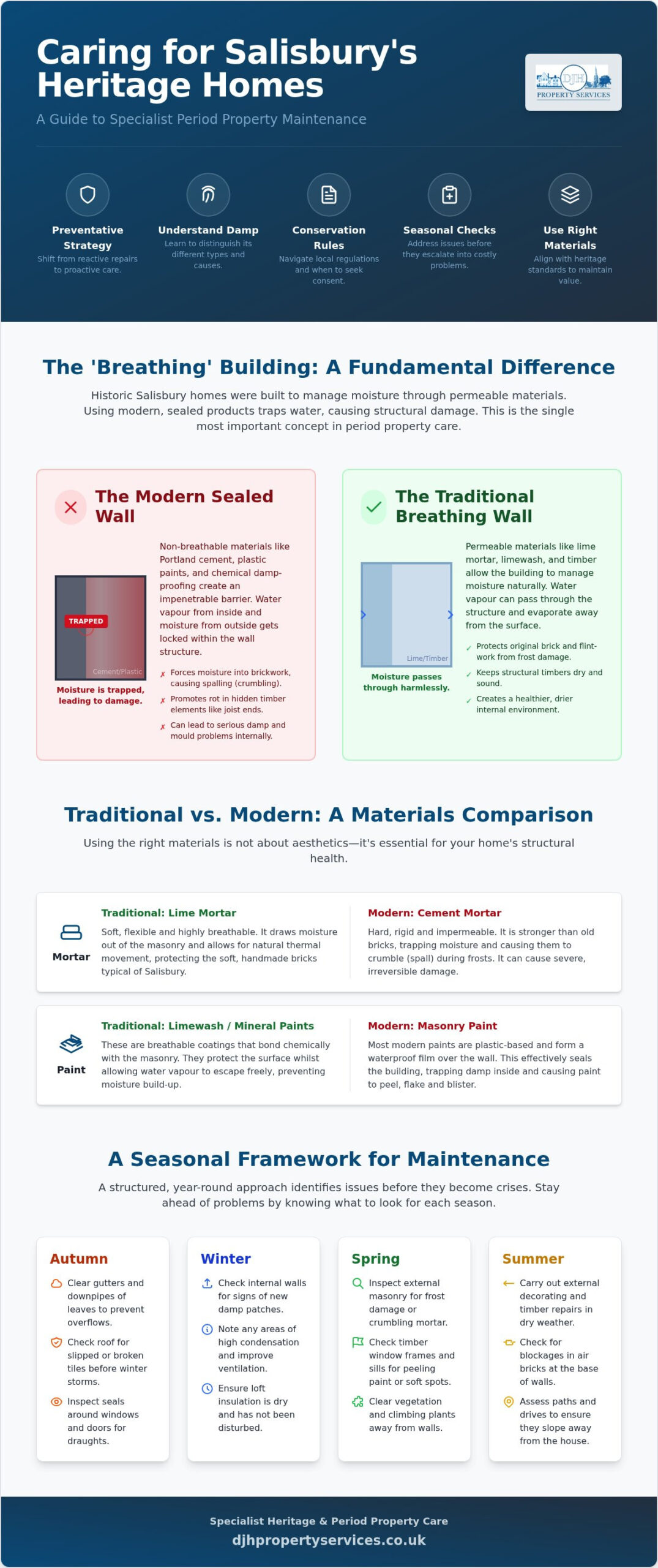
Traditional buildings rely on a “breathing” concept that is fundamentally different from modern construction. Older Salisbury properties don’t have the luxury of plastic membranes or cavity insulation. Instead, they use permeable materials like lime mortar and timber to manage moisture. This allows water vapour to pass through the fabric of the building and evaporate naturally. If you apply modern cement or non-breathable masonry paint, you create an airtight seal. This traps water inside the walls, which eventually causes the brickwork to spall and timber joists to rot.
Choosing sympathetic maintenance isn’t just about preserving kerb appeal; it’s a vital requirement for the structural health of your home. Local flint-work and handmade bricks are part of a flexible building system that moves with the seasons. When these original features are patched with rigid modern materials, they inevitably crack under the pressure of natural thermal movement. By sticking to traditional methods and materials, you avoid the long-term costs of structural repair and ensure your property remains a sound investment for the future. This methodical approach provides the peace of mind that your home’s historical charm is being protected by those who truly understand its construction.
Common Maintenance Challenges for Historic Salisbury Homes
Owning a heritage property requires a keen eye for subtle changes in the building’s fabric. Unlike modern homes, historic structures in Salisbury often signal distress through damp patches, flaking paint, or crumbling mortar. Understanding these signs is the core of effective period property maintenance Salisbury. When these issues are caught early, they remain manageable tasks; left alone, they can compromise the very soul of the building.
Dampness is perhaps the most frequent concern for local homeowners. It usually falls into three categories: rising damp from the ground, penetrating damp through walls or roofs, and condensation caused by modern living habits. It’s vital to identify the source before applying any “damp-proofing” treatments. Many modern chemical injections actually exacerbate the problem by blocking the natural evaporation we discussed in the previous section. Similarly, timber elements require constant vigilance. From the elegant sash windows of Georgian terraces to the structural floor joists and roof timbers, wood is susceptible to rot and infestation if moisture levels remain high.
Masonry and Brickwork: The Perils of Hard Cement
A common mistake in Salisbury is repointing old brickwork with modern Portland cement. Because cement is harder and less permeable than the soft, handmade bricks found in our city, it forces moisture to escape through the brick face rather than the mortar joint. This leads to “spalling,” where the face of the brick flakes away during a frost. Using lime putty or Natural Hydraulic Lime (NHL) mortars is the only way to preserve the masonry. These materials are flexible and “sacrificial,” meaning they breathe and can be replaced without damaging the original bricks. If you notice your mortar is recessed or the bricks are starting to crumble, your masonry needs professional attention.
Roofing and Guttering: Preventing Water Ingress
Salisbury’s varied roof pitches, often covered in traditional Welsh slate or clay tiles, must withstand significant Wiltshire rainfall. Maintaining roofing integrity involves more than just replacing a slipped tile. It requires ensuring lead valleys are clear and that traditional cast iron guttering is free from blockages. For more detailed advice on protecting your home from the elements, you can read our guide on Expert Roofing Services in Salisbury.
Following government guidance on historic building repairs is essential for anyone living in a listed property to avoid legal complications and structural damage. These tasks are the foundation of a dry, sound home. If you’re concerned about the state of your roof or masonry, our team can provide specialist property maintenance to protect your home’s long-term value.
Navigating Conservation Areas and Planning in Salisbury
Managing period property maintenance Salisbury involves more than just selecting the right mortar; it requires a thorough understanding of local planning laws. Salisbury is home to 70 designated conservation areas, each designed to protect the unique architectural character of our city and surrounding villages. Within these zones, your “permitted development” rights are likely restricted. Works that would be straightforward elsewhere, such as replacing windows or adding cladding, usually require formal approval from Wiltshire Council.
It’s essential to distinguish between Listed Building Consent and standard planning permission. If your home is listed, most alterations that affect its character, including internal changes, will require consent. The risks of unauthorised alterations are significant. Local authorities have the power to issue enforcement notices requiring you to undo the work at your own expense. Since October 2026, a new National Scheme of Delegation has streamlined some decisions, but the requirement for robust, well-evidenced applications remains as high as ever. Proactive engagement with the council is the safest route to protecting your investment.
Is Your Property in a Conservation Area?
Areas like the historic city centre or the residential streets of Harnham and Bemerton operate under strict architectural control. In these locations, the choice of exterior finishes is not merely a matter of personal taste. You must ensure that paint colours, masonry treatments, and joinery details align with the established local streetscape. For example, replacing timber sash windows with uPVC is almost always prohibited. If you are looking to add space, you can explore Orangeries that utilise traditional timber craftsmanship. Seeking advice from a seasoned professional who understands these specific local nuances is the best way to avoid costly legal setbacks and ensure your home’s character remains intact.
When undertaking more significant Home Alterations Salisbury: Essential Structural Improvements, you must balance modern building regulations with heritage preservation. Installing steel beams or creating open-plan spaces requires a sympathetic approach to ensure the original structure isn’t compromised. Wiltshire Council offers informal opinions on whether planning permission is needed for a domestic project for a fee of £95, whilst more detailed pre-application advice for listed buildings currently stands at £420. Investing in this professional guidance early ensures your project proceeds smoothly and your home’s structural integrity is preserved for the next generation.
A Seasonal Maintenance Framework for Period Homeowners
Maintaining a historic home in Wiltshire requires a methodical approach that aligns with the changing seasons. A well-structured framework for period property maintenance Salisbury ensures that minor issues don’t develop into major structural failures. By following an annual cycle, you can protect the building’s fabric whilst managing your upkeep budget effectively. This steady, proactive strategy provides the peace of mind that your home remains a safe and stable environment for your family.
Once the winter frosts have passed, spring is the time for a thorough external audit. Look for “blown” brickwork where moisture has frozen and expanded, causing the face of the brick to flake away. As the weather warms into summer, the focus should shift to timber care. This is the ideal window for external painting and joinery repairs, as the wood is at its driest, allowing oils and paints to bond correctly. Autumn is focused on water management; clearing gutters and checking lead valleys is essential before the heavy rains arrive. During winter, monitor internal humidity levels to prevent condensation and check lofts for any signs of new leaks or pest activity.
The Critical External Inspection Checklist
A safe and effective inspection starts from the ground. Use binoculars to spot slipped slates or tiles that might otherwise go unnoticed. Pay close attention to the following areas:
- Masonry Staining: Look for damp patches on brickwork, which often indicate a blocked downpipe or a failing gutter joint.
- Mortar Condition: Examine joints for signs of erosion or deep cracking, especially around window and door frames where movement is most common.
- Timber Integrity: Assess the condition of exterior paintwork. Any cracking or peeling can allow water to reach the underlying timber, leading to rapid decay.
- Drainage: Ensure that ground-level drains are clear of leaves and debris to prevent water from pooling against the base of your walls.
Internal Health Checks for Older Buildings
Older lofts are prone to damp if ventilation is restricted. You must ensure that any modern insulation hasn’t blocked the natural airflow at the eaves. Keep a close eye on any existing cracks in plasterwork. Whilst many are seasonal and harmless, any sudden widening or new movement should be assessed by a professional. Monitoring these internal signs allows you to catch structural shifts before they become critical. If you have noticed signs of wear or want a professional assessment of your home’s condition, we can provide expert property maintenance to keep your heritage home in peak condition.
Expert Heritage Care with DJH Property Services
DJH Property Services has been a fixture in the local community for over 50 years. This longevity isn’t just a number; it represents a deep-rooted understanding of the city’s residential architecture. When it comes to period property maintenance Salisbury, our team brings a level of seasoned expertise that only comes from decades of hands-on experience with the local building stock. We don’t just see a house; we see the generations of craftsmanship that built it, and we work to ensure that legacy continues for your family.
Our multi-trade approach is a significant advantage for owners of historic homes. Instead of managing multiple separate contractors, you benefit from a cohesive team skilled in carpentry, bricklaying, and roofing. This integrated perspective is vital for sympathetic property refurbishment. For instance, a roofing issue often involves both structural timber work and traditional masonry; having these skills under one roof ensures the repair is holistic and structurally sound. We understand the nuances of Salisbury’s flint and lime construction, ensuring every intervention respects the building’s original design.
A Trusted Local Authority in Salisbury Building
Trust is the foundation of our business. Most of our work comes from word-of-mouth recommendations, which is a testament to our commitment to high-quality craftsmanship and reliable service. Choosing Construction Builders in Salisbury who understand heritage requirements is essential for protecting your property’s value. We organise every project with meticulous attention to detail. This methodical approach ensures work is delivered on time and within the agreed budget, providing you with total transparency and peace of mind throughout the process.
Discussing Your Period Property Project
Every period home has its own set of challenges and architectural history. We provide tailored maintenance plans for domestic clients, focusing on the specific needs of your building’s fabric and your long-term goals. Whether you require a professional assessment of your home’s condition or need advice on a specific structural repair, we are here to act as your guiding hand. You can contact Dan and the team for expert guidance, knowing you are speaking with professionals who take personal pride in every project they undertake. We look forward to helping you preserve the character and integrity of your Salisbury home for many years to come.
Securing the Future of Your Salisbury Heritage Home
Preserving a historic property requires a shift from reactive repairs to a methodical, preventative strategy. By prioritising breathable materials and adhering to a consistent seasonal framework, you can protect your home from the common pitfalls of damp and structural decay. Navigating the specific requirements of local conservation areas ensures that every alteration respects the city’s architectural legacy whilst maintaining your property’s value.
Investing in professional period property maintenance Salisbury provides the peace of mind that your home is in capable hands. At DJH Property Services, our Salisbury-based team of skilled tradespeople brings over 50 years of industry experience to every project. We have established a reputation for heritage-sympathetic work that combines traditional craftsmanship with reliable, professional service. Whether you are managing flint-work repairs or complex timber joinery, we offer the technical authority needed for sensitive restoration.
Discuss your period property maintenance with our Salisbury experts today. Your home is a vital part of our city’s history, and we are ready to help you protect it for the next generation.
Frequently Asked Questions
Do I need planning permission for repairs on a period property in Salisbury?
You usually don’t need planning permission for minor “like-for-like” repairs using traditional materials. However, if your home is a listed building, you will likely require Listed Building Consent for any works that affect its character, including internal changes. It is always best to check with Wiltshire Council or consult a seasoned professional before starting. This ensures you avoid enforcement notices for unauthorised alterations on heritage assets.
Why is lime mortar better than cement for my Victorian house?
Lime mortar is breathable and flexible, which allows moisture to evaporate naturally from the building’s fabric. Modern cement is too rigid and impermeable for soft Victorian bricks. When moisture gets trapped behind hard cement, it’s forced out through the brick face, causing it to flake or “spall” during a frost. Using lime is a fundamental part of period property maintenance Salisbury to ensure long-term structural health.
How can I stop damp in a solid brick wall without using a damp-proof course?
The most effective way to manage damp in solid walls is to ensure the building can breathe. You should lower external ground levels, clear blocked gutters, and replace modern cement pointing with traditional lime mortar. These steps allow trapped moisture to escape. Many historic homes in Salisbury don’t need a chemical damp-proof course if the original drainage and ventilation systems are functioning correctly and maintained.
Can I replace my old sash windows with double glazing in a conservation area?
Standard uPVC double glazing is almost always prohibited in Salisbury’s conservation areas. You can often get approval for slimline heritage double glazing if the units are fitted into traditional timber frames that match the original profiles. This preserves the property’s historical character whilst improving thermal efficiency. We recommend seeking advice from a conservation officer to ensure your new windows meet the strict local architectural standards.
What are the signs that my period property needs urgent maintenance?
You should look for crumbling mortar, damp internal patches, or “blown” bricks where the surface is flaking away. Slipped roof tiles or leaning chimney stacks also require immediate attention to prevent water ingress. Inside the home, persistent condensation or new, widening cracks in plasterwork can signal deeper structural issues. Catching these signs early is the best way to prevent a minor repair from becoming a costly project.
How often should I have my roof inspected on an older home?
We recommend a thorough roof inspection at least once a year, ideally in the spring. Winter frosts can loosen tiles and heavy autumn leaf fall often blocks lead valleys and gutters. A regular annual check-up is a vital part of period property maintenance Salisbury. It allows you to identify slipped slates or failing flashings before they lead to significant timber rot or internal ceiling damage.
Is it possible to improve the energy efficiency of a listed building?
Yes, and recent 2026 planning updates have made this process more straightforward. You can often install secondary glazing, loft insulation, or draught-proofing without harming the building’s heritage. The government now recognises energy-efficiency measures as a “public benefit” in planning decisions. It’s essential to ensure any upgrades don’t trap moisture, so always use breathable insulation materials to protect the original timber and masonry.
What is the most common cause of structural issues in Salisbury period homes?
Poor water management is the primary cause of structural failure in our local historic buildings. When gutters leak or modern non-breathable paints trap moisture, the underlying timber and masonry begin to decay. Over time, this leads to rot in floor joists and the erosion of structural brickwork. Keeping your drainage clear and using sympathetic materials is the most effective way to ensure your home remains dry and sound.