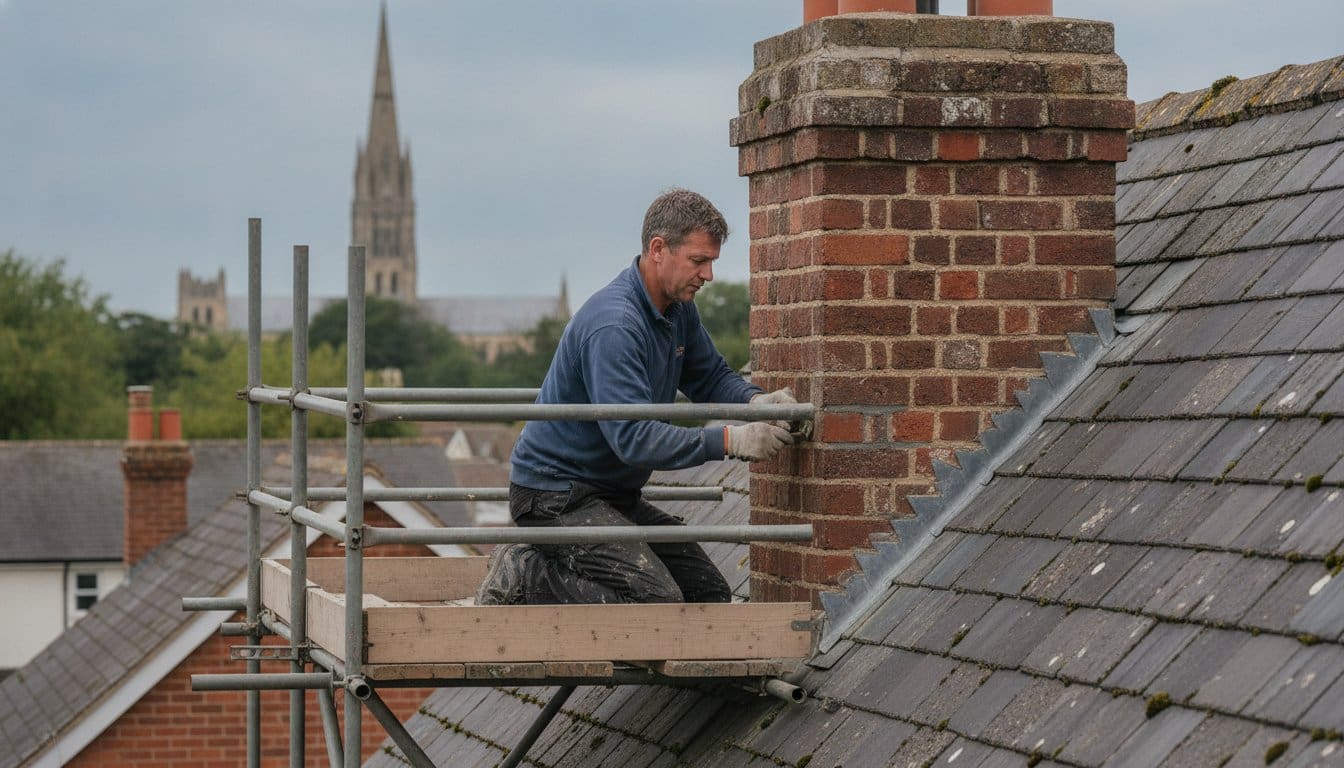
Have you ever looked up at your roofline after a heavy Wiltshire storm and wondered if those hairline cracks in the masonry are more than just a cosmetic concern? It’s a common worry for homeowners in our historic city, where the combination of ageing brickwork and driving rain often leads to silent structural damage or persistent internal damp. You likely want the reassurance that your home is protected without losing the character of its original design. Securing professional chimney repair in Salisbury is about more than a quick fix; it’s about preserving the integrity of your property for decades to come.
We understand that the fear of structural failure or water ingress can be daunting, especially when trying to find a builder who respects local period aesthetics. In this article, you’ll discover how to identify common chimney faults, the importance of using the right materials for our region’s unique architecture, and how regular maintenance prevents costly rebuilds. We will guide you through the essentials of restoring structural safety, from professional repointing to weather-proofing, so you can enjoy total peace of mind regardless of the British weather.
Key Takeaways
- Identify the subtle warning signs of masonry decay and structural fatigue accelerated by the specific damp climate of the Salisbury area.
- Understand the technical importance of professional repointing and leadwork in maintaining a weather-tight seal against the roofline.
- Learn how to assess the structural integrity of your property to determine if you need a targeted chimney repair in Salisbury or a more substantial rebuild.
- Discover practical maintenance habits, including ground-level inspections and gutter care, to prevent water damage and costly future repairs.
- Gain insight into why a background in professional bricklaying and roofing is essential for ensuring a repair that matches your home’s existing aesthetic.
Common Chimney Problems in Salisbury: Identifying the Warning Signs
A chimney is more than just a decorative feature on a Victorian terrace or a rustic stone cottage; it’s a vital component for both ventilation and structural stability. By understanding chimney construction, homeowners can appreciate how these stacks draw combustion gases safely away from the living space whilst acting as a central pillar of the roof’s support system. In Salisbury, our unique architectural heritage means many chimneys are over a century old, making them particularly vulnerable to the effects of time and the elements.
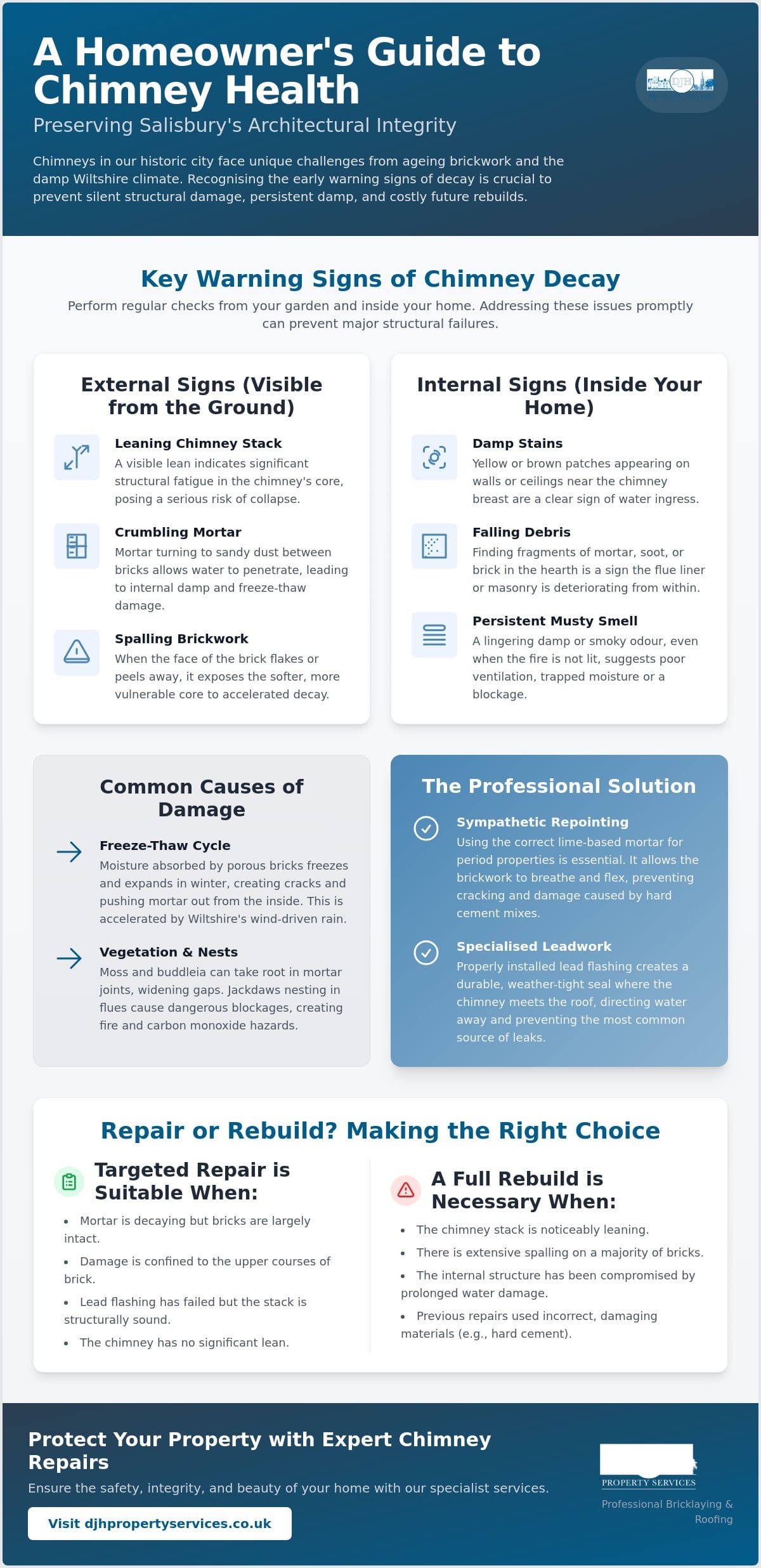
Identifying the need for chimney repair Salisbury often starts with a simple visual check from the garden. You might notice the stack has developed a slight lean, or perhaps the mortar between the bricks has begun to crumble into a sandy dust. These aren’t just cosmetic issues. A leaning chimney suggests significant structural fatigue, while failing mortar allows water to penetrate deep into the masonry, eventually leading to internal damp patches on your upstairs chimney breasts.
Weathering and Erosion in Wiltshire
Wiltshire’s climate presents specific challenges for masonry. During damp winters, moisture seeps into the porous brickwork of older properties. When the temperature drops, this water freezes and expands, physically pushing the brick apart from the inside. This “freeze-thaw” cycle is worsened by wind-driven rain sweeping across the Salisbury Plain, which lashes the exposed stacks of taller properties. Spalling occurs when the external face of a brick flakes away due to this internal moisture pressure, leaving the softer core exposed to even faster decay.
Vegetation and Debris Issues
Nature is often destructive to a chimney’s health. In Salisbury’s older areas, buddleia or thick moss frequently take root in mortar joints, acting as wedges that widen gaps and allow more water ingress. Local jackdaws also find chimneys ideal for nesting, which can lead to dangerous obstructions. A blocked flue is a serious fire hazard and a source of carbon monoxide build-up. Installing a professional cowl or bird guard is the most effective way to prevent these obstructions whilst protecting the flue from the rain.
Inside the home, the signs of trouble are often found in the hearth or on the walls. Promptly addressing these signs with professional chimney repair Salisbury ensures that a small leak doesn’t turn into a major structural failure. Watch for these specific indicators:
- Damp stains: Brown or yellow patches appearing on the ceiling or walls near the chimney breast.
- Falling debris: Small fragments of brick, mortar, or soot collecting in the grate or hearth.
- Aromatic changes: A persistent musty smell or the scent of smoke when the fire isn’t lit.
The Technical Craft of Chimney Restoration: Repointing and Leadwork
Restoring a chimney stack requires a precise blend of masonry and roofing skills. Whilst many homeowners view this as a simple patch-up task, a successful chimney repair Salisbury relies on understanding the structural physics of the entire stack. Professional repointing acts as the primary barrier against the elements, ensuring the internal core remains dry and stable. This process is complemented by robust leadwork and properly applied flaunching, which together direct water away from the vulnerable joints where the stack meets the roofline.
Sympathetic Repointing for Period Properties
In a city like Salisbury, the choice of mortar is critical. Many of our local period homes were built using lime mortar, which is softer and more breathable than modern alternatives. Using a hard, cement-based mix on these older bricks can cause irreversible damage; the bricks cannot expand or contract naturally, leading to cracking and “blown” faces. Our approach involves carefully raking out the old, failing mortar to a consistent depth before applying a sympathetic mix. This follows technical guidance on chimney maintenance for historic structures, ensuring your home remains weather-tight without compromising its architectural heritage.
Specialised Leadwork and Flashing
Specialised leadwork is a core part of any chimney repair Salisbury project. Lead flashing bridges the gap between the masonry and the roof tiles, preventing water from seeping into your attic space. Step flashing follows the line of the bricks, whilst apron flashing covers the base. Over time, lead can develop “white powder” corrosion or fatigue splits due to thermal expansion. Replacing worn lead is a long-term investment that prevents the need for extensive internal repairs. If you notice damp near your upstairs ceilings, it’s often a sign that the flashing has reached the end of its natural lifespan.
The very top of the chimney, known as the flaunching, is a sloped bed of mortar that holds the chimney pots in place and sheds water. If this cracks, rain pools around the pots and seeps down the flue, causing internal damp. Because we are experts in professional bricklaying and property maintenance, we ensure the flaunching is smooth, dense, and properly angled to protect the stack’s crown. This level of detail ensures the structural safety of your home is never in doubt, providing a finish that matches the existing aesthetic of your property.
Chimney Repair vs. Rebuilding: Making the Right Choice for Your Home
Deciding between a targeted repair and a more comprehensive rebuild is a pivotal moment for any homeowner. Whilst minor cracks can often be resolved with professional repointing, there comes a point where a simple patch-up is no longer sufficient to guarantee safety. A professional chimney inspection is the most reliable way to assess the core health of the masonry and determine the most viable path forward. Investing in chimney repair Salisbury now can prevent the sudden, high costs associated with a total structural collapse later.
Internal home alterations frequently impact the health of your chimney. If you’ve recently removed an internal chimney breast to create space, the weight of the remaining stack must be correctly supported by gallows brackets or steel beams. Without this support, the stack can shift or sink, leading to cracks in the roofline. Under ‘The Building Regulations 2010’, any such structural work requires approval from Wiltshire Council to ensure the building remains safe and compliant.
When a Rebuild is Necessary
A leaning chimney stack is a primary indicator of internal failure and usually necessitates professional chimney repair Salisbury to prevent a total collapse. If more than 25% of the mortar is missing from the joints, a rebuild may be safer than attempting to repoint a compromised structure. Extensive flue damage can also compromise the stack’s stability from the inside out. In these cases, taking the stack down to the roofline and rebuilding with fresh masonry is the only way to restore long-term peace of mind.
Preserving Character During Restoration
Maintaining the visual heritage of our city is just as important as structural safety. When a rebuild is required, we prioritise matching the colour and texture of existing brickwork, often sourcing reclaimed materials for Victorian terraces. Re-using original chimney pots helps retain the property’s historical silhouette whilst ensuring the new masonry is weather-tight. This careful approach ensures that your chimney integrates perfectly with any existing home extensions in Salisbury, blending modern construction standards with traditional craftsmanship.
Preventing Chimney Damage: A Maintenance Guide for Salisbury Homeowners
Preventative care is the most effective way to avoid the disruption of a major structural project. Whilst it is easy to ignore the masonry high above your head, the Salisbury climate can be unforgiving to neglected stonework. By investing in regular property maintenance in Salisbury, you can catch minor issues before they escalate into structural failures. A proactive approach ensures that any necessary chimney repair Salisbury remains a manageable task rather than a costly emergency intervention.
Ground-level inspections are an excellent starting point. Every spring and autumn, take a pair of binoculars and scan the stack for changes. Look for moss growth, which holds moisture against the bricks, and check the base of the chimney where it meets the roof tiles. Blocked gutters are a common culprit for damp; when they overflow, water splashes back onto the chimney’s masonry, saturating the mortar joints and accelerating erosion. Similarly, regular sweeping is essential for active flues to prevent the build-up of soot and tar, which can ignite or corrode the internal lining over time.
Your Annual Chimney Checklist
A structured review of your chimney’s exterior helps you spot early warning signs of decay. Focus on these three areas during your annual inspection:
- Masonry Integrity: Search for new hairline cracks in the mortar or the faces of the bricks, particularly after a period of heavy frost.
- Lead Stability: Inspect the lead flashing for signs of lifting, thinning, or movement, especially following the high winds typical of a Wiltshire winter.
- Crown Condition: Ensure the chimney pot remains perfectly upright and check that the flaunching, the mortar bed at the top, is free from deep cracks.
The Role of Ventilation
A chimney must “breathe” even if the fireplace below is no longer in use. Redundant chimneys often suffer from internal damp because they’ve been sealed at both ends, trapping moisture within the flue. This leads to salt staining on internal wallpaper and a persistent musty odour. Installing a ventilated cap or cowl keeps rain out whilst allowing sufficient airflow to keep the masonry dry. Be mindful that internal renovations, such as adding false ceilings, can accidentally block ventilation paths, so always consider the impact on your chimney’s airflow during home alterations.
If your ground-level inspection reveals any cause for concern, seeking a professional assessment is the safest next step. For a thorough review of your stack’s condition or to discuss a chimney repair Salisbury, contact us for expert property maintenance and ensure your home remains protected against the elements.
Expert Chimney Repairs with DJH Property Services: Quality You Can Trust
DJH Property Services brings over 50 years of heritage to every project we undertake. We aren’t just roofers; our deep-rooted background in professional bricklaying ensures that every chimney repair Salisbury is handled with a master builder’s eye for structural stability. This legacy of craftsmanship allows us to tackle complex restorations on historic properties with the same precision as routine maintenance tasks. We select only the highest-grade materials, from durable lead to specific mortar mixes, ensuring our work withstands the test of time and the challenging Wiltshire elements.
Managing a chimney project can be logistically challenging for any homeowner. We simplify the entire process by overseeing every stage, including the safe erection of scaffolding and the thorough clean-up of the site once the masonry work is complete. Our goal is to provide a seamless service that restores your home’s integrity without the stress often associated with major building works. You can rest assured that the safety of your property is our primary concern from the moment we arrive on-site.
A Local Team of Skilled Tradespeople
Our team consists of specialised tradespeople who understand the unique architectural nuances of Salisbury and the surrounding villages. Whether you live in a timber-framed cottage or a red-brick terrace, we bring a wealth of experience in sympathetic restoration and specialised roofing. Hiring a local building contractor means you benefit from a team that takes personal pride in preserving the character of our shared community. We focus exclusively on residential properties, providing the dedicated, expert attention your home deserves.
Start Your Repair Project Today
If you’ve noticed any of the warning signs discussed in this guide, the best course of action is a professional assessment. We offer a transparent approach to project management, providing clear insights into the condition of your stack and the most effective solutions. Our quotes are detailed and honest, reflecting our commitment to quality and professional decorum. Don’t wait for a minor leak to become a structural hazard. Contact DJH Property Services for your chimney repair quote and take the first step toward a safer, weather-tight home.
Protecting Your Home’s Heritage and Safety
Maintaining a weather-tight chimney is essential for the long-term health of your property. By identifying early warning signs such as crumbling mortar or internal damp patches, you can address issues before they compromise the structural stability of your stack. Whether your home requires delicate repointing with traditional lime mortar or a more substantial rebuild to match its original Victorian character, the focus should always remain on quality craftsmanship. Investing in professional chimney repair Salisbury ensures that your roofline remains secure against the unpredictable Wiltshire weather whilst preserving the aesthetic appeal of your home.
As a trusted, local family business with over 50 years of industry experience, we understand the specific needs of Salisbury’s period properties. Our team of expert bricklaying and roofing specialists is dedicated to providing peace of mind through precise, durable solutions. Secure your home with professional chimney repairs from DJH Property Services. We take pride in our legacy of excellence and look forward to helping you safeguard your property for many years to come.
Frequently Asked Questions
How much does chimney repair in Salisbury typically cost?
The cost of repairs varies significantly based on the height of the stack, the extent of the masonry damage, and whether scaffolding is required. A minor repointing task is naturally more affordable than a partial rebuild of the stack above the roofline. We provide bespoke quotes following a professional assessment of your property to ensure you receive an accurate price for the specific work required to restore your chimney’s integrity.
Do I need scaffolding for a simple chimney repointing job?
Scaffolding is almost always necessary for safety and to ensure a high-quality, professional finish. Working at height requires a stable platform so the mason can rake out old mortar and apply new joints with precision. Whilst some minor repairs on low-level roofs might occasionally utilise a scaffold tower, most projects involving a chimney repair in Salisbury require full scaffolding to comply with modern health and safety regulations.
How long does it take to rebuild a chimney stack?
A partial chimney rebuild typically takes between two and four days, depending on the weather conditions and the size of the stack. This timeframe includes the careful removal of the damaged masonry, cleaning the area, and rebuilding the stack to its original height. If we are sourcing reclaimed bricks to match a period property, we ensure the pace of work allows for a seamless and durable result.
Can a damaged chimney cause damp inside my house?
Yes, a compromised chimney is a frequent source of internal damp and unsightly salt staining. Cracks in the mortar joints or failing lead flashing allow rainwater to seep into the masonry, which then travels down the chimney breast into your upstairs rooms. Addressing these external faults promptly is the most effective way to stop moisture ingress and prevent long-term damage to your internal plasterwork and wallpaper.
Is it possible to repair a chimney during the winter months?
Repairs can be carried out during the winter, provided the conditions are dry and the temperature remains above freezing. Mortar requires specific temperatures to set correctly and prevent frost damage during the curing process. We monitor the local Salisbury forecast closely to ensure that any chimney repair in Salisbury is performed during a suitable weather window to guarantee the structural longevity of the masonry work.
What is the difference between flaunching and repointing?
Repointing involves replacing the mortar joints between the bricks of the stack, whereas flaunching refers to the sloped mortar bed at the very top. The flaunching’s primary purpose is to hold the chimney pots securely in place and shed water away from the flue. both elements are vital for a weather-tight finish; failing flaunching often leads to water entering the flue and causing internal dampness.
Do I need planning permission to repair or rebuild my chimney in Salisbury?
Planning permission is generally not required for repairs or like-for-like rebuilds, although exceptions exist for listed buildings or properties within conservation areas. However, any structural alterations, such as the partial removal of a load-bearing chimney, must comply with the Building Regulations 2010. It is always advisable to check with Wiltshire Council’s building control department if you are unsure about the specific requirements for your home.
Can you match the bricks on my period property for a chimney repair?
We pride ourselves on our ability to source materials that match the unique character of Salisbury’s historic architecture. Whether your home features Victorian red brick or local stone, we use reclaimed materials and specific mortar mixes to ensure a seamless finish. This attention to detail ensures that the repair is structurally sound whilst remaining entirely sympathetic to the original aesthetic and heritage of your property.