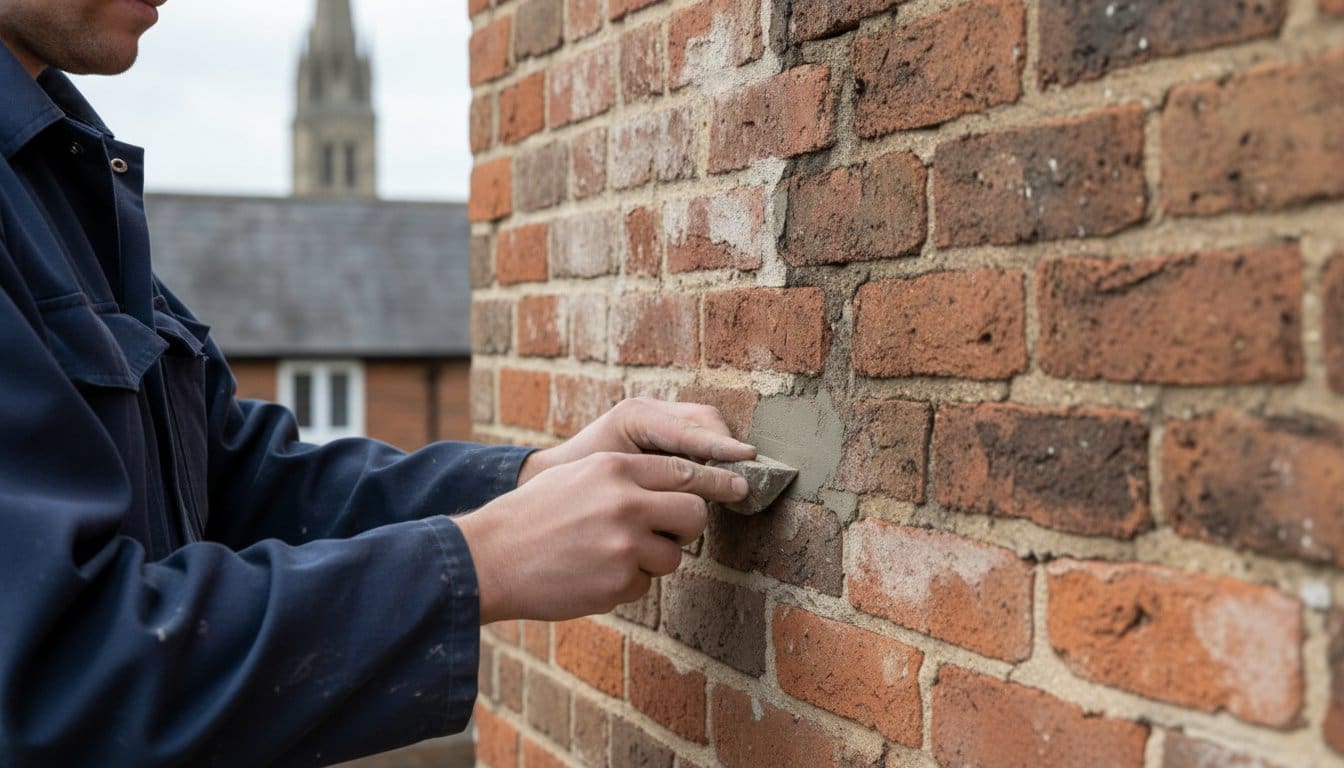
The wrong choice of mortar can silently compromise a property’s health for years before the first signs of damp appear. Many homeowners in our historic city overlook the state of their masonry until a brick face begins to flake away or moisture penetrates the interior walls. Choosing the right approach for brickwork repointing Salisbury is far more than a simple cosmetic update; it’s a vital act of preservation that requires a deep understanding of local building traditions. We recognise the anxiety that comes with seeing your property’s exterior degrade, particularly the confusion surrounding whether to use traditional lime or modern cement mortars.
This guide provides the clarity you need to protect your investment and maintain your peace of mind. You’ll discover how to accurately identify failing joints and select the materials that best suit your property’s age and construction. We’ll also discuss how professional restoration prevents moisture ingress whilst restoring the natural kerb appeal of your home. By the end of this article, you’ll have a clear roadmap to achieving a weather-tight, structurally sound property that stands firm against the elements for decades to come.
Key Takeaways
- Learn to identify the early warning signs of masonry decay by using simple visual checks and the screwdriver test to assess mortar integrity.
- Discover why selecting the correct sacrificial mortar is the most critical step in successful brickwork repointing Salisbury to ensure your bricks remain undamaged.
- Understand the professional standards for raking out joints and how dust suppression methods maintain a clean site whilst work is underway.
- Plan your restoration effectively by identifying the ideal weather conditions for mortar curing and when scaffolding is necessary for higher elevations.
- Benefit from the peace of mind that comes with hiring seasoned local experts with five decades of experience in Salisbury property maintenance and bricklaying.
Understanding Brickwork Repointing for Salisbury Homes
Repointing is the essential process of renewing the external part of mortar joints in a masonry wall. Over time, weathering and decay create voids in the joints between bricks, allowing water to penetrate the structure. For homeowners, Understanding Brickwork Repointing is the first step in preserving the longevity of their property. In our city, brickwork repointing Salisbury is particularly vital because of the diverse range of historic and modern architecture. From the red-brick Victorian terraces near the station to the flint-walled cottages in the surrounding Wylye Valley, each building requires a specific technical approach to ensure the mortar performs its sacrificial role.
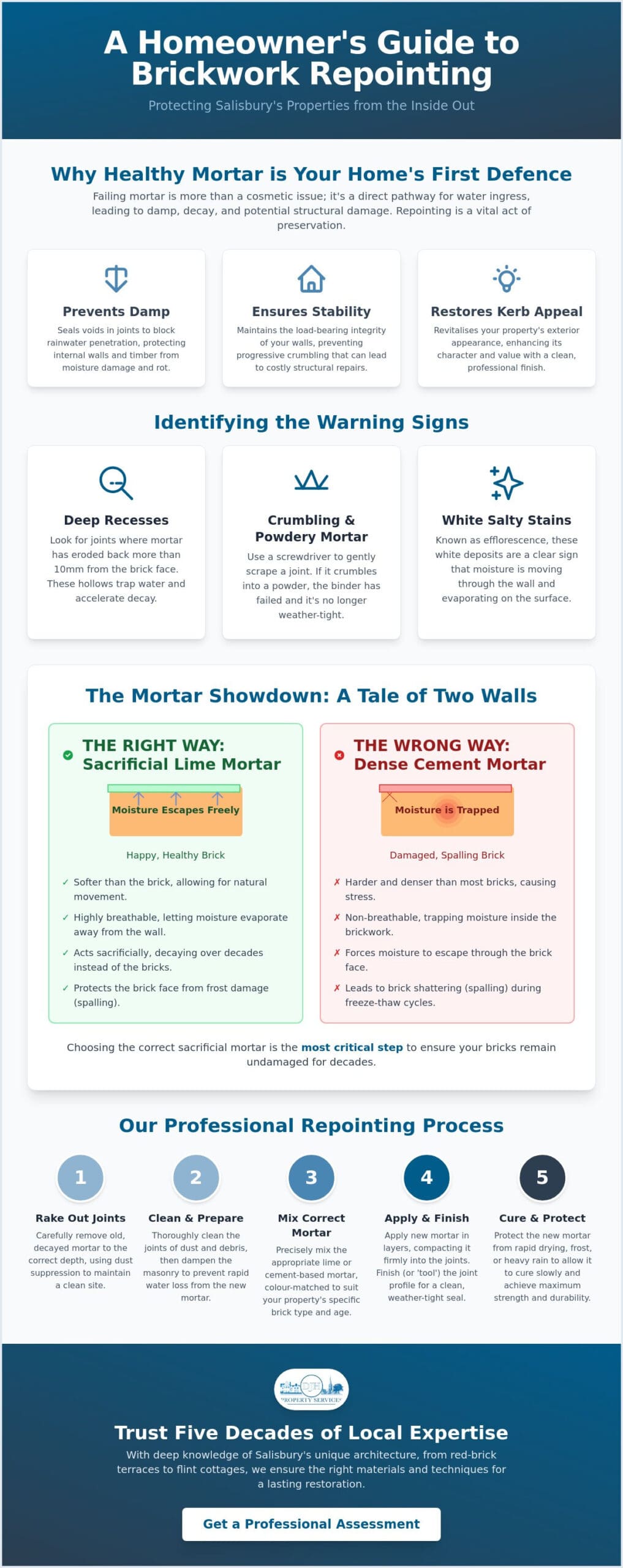
In a healthy wall, the mortar must be softer and more porous than the bricks themselves. This allows the mortar to act as a sacrificial element, absorbing moisture and harmful salts that would otherwise cause the bricks to decay. If the mortar is too hard, such as modern cement used on historic lime-based walls, the moisture becomes trapped within the brick. During Wiltshire’s damp winters, this trapped water freezes and expands, causing the brick face to shatter or spall. This process accelerates decay and can lead to significant masonry damage if left unaddressed.
The Structural Importance of Healthy Mortar
Failing mortar is more than a cosmetic flaw. When joints erode, they create direct pathways for water ingress, leading to internal dampness and timber rot. Maintaining these joints ensures the load-bearing integrity of your external walls remains intact. By addressing gaps early, you prevent the progressive crumbling of the masonry, which can eventually lead to much more expensive structural repairs. It’s a fundamental part of keeping a building weather-tight and stable.
Repointing vs. Re-bricking: Knowing the Difference
Deciding whether a wall needs simple repointing or more extensive re-bricking depends on the depth of the decay. If the mortar has receded but the bricks are sound, repointing is usually sufficient. However, if the bricks have already begun to flake or crack, individual units may need replacement. Consistent property maintenance Salisbury acts as a preventative shield, catching these issues before a full-scale rebuild becomes necessary. We always assess the condition of the masonry units whilst preparing the joints to ensure the best long-term outcome.
Masonry Styles Common in the Salisbury Area
Salisbury’s architecture is a tapestry of materials. The city centre is dominated by traditional red clay bricks, which require precise colour matching to maintain their historic character. In nearby villages, we often see flint and stone masonry, which presents unique challenges for jointing and finishing. Even in newer developments like Bishopdown, modern brickwork standards must be upheld to ensure the property withstands the local climate for the next fifty years. Each style requires a different hand and a different mix of materials to ensure a seamless and durable finish.
Identifying the Warning Signs: Does Your Property Need Attention?
Walking around your property once or twice a year is the best way to spot masonry trouble before it requires expensive intervention. Whilst many Salisbury homes appear sturdy from a distance, a closer look often reveals the subtle beginning of mortar failure. If you notice deep recesses where the mortar has eroded back more than 10mm from the brick face, it’s a clear indicator that your masonry is no longer protected. These hollow joints allow water to pool, which eventually seeps into the structure and causes internal issues. For those considering brickwork repointing Salisbury, a simple self-diagnostic can provide immediate clarity on the health of your walls.
The most reliable method for a homeowner to assess their masonry is the “Screwdriver Test”. Take a standard flat-head screwdriver and gently scrape it along a horizontal mortar joint. Healthy mortar should feel like solid stone. If it crumbles easily into a fine powder or falls away in large chunks, the binder has failed and the joint is no longer weather-tight. This degradation is often accompanied by efflorescence, those unsightly white salty deposits that appear on the brickwork. These salts are carried to the surface by moisture, acting as a clear warning that your walls are becoming saturated. If you’re unsure about the results of your inspection, our team of experts in property maintenance can provide a professional assessment of your brickwork repointing Salisbury needs.
Don’t ignore the greenery growing from your walls. Moss, lichen, and small weeds growing directly from the mortar joints are a major red flag. Their roots act like tiny wedges, physically prying the joints apart whilst holding moisture against the brickwork. This constant dampness accelerates decay, especially when combined with the internal signals of failure, such as damp patches or peeling wallpaper on the inside of external walls. Spotting these signs early is the key to maintaining a dry, stable home.
Physical Indicators of Mortar Decay
Erosion typically occurs over several decades, but exposed elevations in Salisbury often suffer faster due to prevailing winds and driving rain. You might notice “step-cracking”, where a hairline fracture follows the zig-zag pattern of the mortar joints. This often suggests that the mortar has become too brittle to accommodate the natural, minute movements of the building. When the mortar turns to powder and brushes away with a simple touch, it has lost its structural purpose entirely.
Secondary Damage Caused by Neglect
Ignoring failing mortar leads to more than just an untidy exterior. When water enters a failing joint and freezes, it expands with immense force. This is the primary cause of frost damage, where the hard outer face of the brick literally snaps off. In cavity walls, persistent dampness can also lead to the corrosion of metal wall ties, compromising the structural stability of the entire house. Beyond this, damp external walls are significantly less efficient at retaining heat, often resulting in higher heating costs as your home struggles to stay warm.
The Repointing Process: Materials, Techniques, and Craftsmanship
The foundation of a durable finish lies in the meticulous preparation of the masonry. We don’t simply apply new mortar over the existing decayed material; such a practice, known as “feather edging”, leads to premature failure and a poor aesthetic result. Instead, we rake out the old, failing mortar to a consistent depth, typically between 10mm and 20mm. This creates a clean, square recess that allows the new mortar to bond deeply with the masonry. To keep your Salisbury home clean whilst we work, we utilise advanced dust suppression systems and vacuum attachments, ensuring that grit and debris don’t settle on your windows, pathways, or garden.
Once the joints are prepared and cleaned, the application of new mortar begins. This stage requires a steady hand and a deep understanding of the material’s behaviour. We pack the mortar firmly into the joints using specialist irons, ensuring no air pockets remain. These hidden voids are dangerous; they trap moisture which can freeze and expand, blowing the joint out from the inside. It’s a methodical, unhurried process that reflects our commitment to long-term structural stability. When undertaking brickwork repointing Salisbury, this level of precision is what separates a professional restoration from a temporary fix.
The Lime vs. Cement Debate
Many properties in the Salisbury city centre date back to the Victorian or Georgian eras, built with soft, porous bricks and traditional lime-based mortar. Using modern Portland cement on these period homes is a common but devastating mistake. Cement is far harder and less breathable than lime; it prevents moisture from escaping through the joints, forcing it instead to evaporate through the brick face. This eventually causes the bricks to crumble and decay. We prioritise traditional lime mortars for older properties, carefully matching the aggregate, colour, and texture to the original Salisbury aesthetic to ensure the building can breathe naturally.
Joint Profiles and Aesthetic Finishes
The final profile of the joint affects both the appearance and the weather-resistance of the wall. We help homeowners select the finish that best suits their property’s age and exposure:
- Flush pointing: The mortar is finished level with the brick face, providing a clean, honest appearance common in many Wiltshire developments.
- Weather struck pointing: The mortar is angled slightly downwards to shed water away from the joint. It’s the superior choice for exposed elevations that bear the brunt of local wind and rain.
- Recessed joints: Whilst aesthetically pleasing on modern designs, these are often avoided on older properties as they create a ledge where water can sit, accelerating masonry decay.
Selecting the correct profile ensures your home remains weather-tight whilst looking its absolute best.
Planning Your Project: Timelines and Local Considerations
Successful brickwork repointing Salisbury depends heavily on the British weather. Mortar requires a frost-free environment to cure properly, making the months between April and October the ideal window for most restoration work. If the temperature drops below freezing during the first few days of curing, the water in the mortar expands and shatters the bond before it has even set. Conversely, extreme summer heat can dry the mix too quickly, leading to shrinkage cracks. We carefully monitor local forecasts to ensure every joint has the best start, often using damp burlap covers to regulate the drying process in warmer spells.
The time required for a project varies based on the property size and the complexity of the masonry. A standard terraced home often takes between seven and ten working days, whilst a larger semi-detached property might require two to three weeks of dedicated work. Access is another critical factor. Whilst lower levels can often be reached with mobile towers, any work on chimneys or upper storeys will necessitate professional scaffolding. This ensures our craftsmen have a stable, safe platform to work with the precision required for high-quality restoration, particularly on the exposed gables common in Wiltshire homes.
Working in Salisbury’s Conservation Areas
Many parts of our city fall under strict protection, including Article 4 directions that limit the changes you can make to your property’s exterior. If you live in a conservation area or a listed building, you’ll likely need to liaise with Wiltshire Council before work begins. They often insist on “like-for-like” materials, which usually means using traditional lime mortars rather than modern alternatives. Investing in professional brickwork repair Salisbury ensures that these heritage standards are met, protecting both the historical value and the legal standing of your home.
What Influences the Project Cost?
Several variables dictate the final investment required for your masonry. The hardness of the existing mortar is a primary factor; removing old, stubborn cement is far more labour-intensive than raking out soft, degraded lime. The size of your bricks also matters. Smaller bricks, common in older Salisbury cottages, result in more linear metres of joints per square metre of wall compared to modern, larger bricks. Finally, our city’s narrow, historic streets can present logistical challenges for scaffolding and material deliveries, which we factor into our initial planning. If you’re ready to discuss your specific requirements, our team at DJH Property Services is here to provide an expert assessment of your masonry.
Professional Brickwork Restoration with DJH Property Services
DJH Property Services has spent over 50 years refining the art of masonry restoration across the Wiltshire landscape. We aren’t just a faceless contractor; we’re a team of local craftsmen who’ve spent decades maintaining the historic skyline of our city. This deep-rooted connection to the community means we take personal pride in every project, whether it’s a small terraced cottage or a substantial period residence. Our approach to brickwork repointing Salisbury combines time-honoured techniques with a commitment to using the highest quality materials, ensuring your home remains a source of pride for generations. We understand that your property is your most significant investment, and our goal is to provide the peace of mind that comes with expert craftsmanship.
Our heritage is built on reliability and a thorough understanding of local building traditions. We’ve seen how Salisbury’s unique climate affects different masonry types, from the porous red bricks of the city centre to the flint-walled structures in the surrounding valleys. This experience allows us to handle even the most complex restorations with quiet confidence. By choosing a team with half a century of local history, you’re ensuring that your brickwork repointing Salisbury is handled by professionals who value quality and durability above all else.
Why Choose a Multi-Skilled Local Builder?
Repointing often reveals hidden issues that a specialist masonry-only firm might overlook. Whilst working on your scaffolding, we frequently identify related problems like blocked gutters, decayed fascia boards, or slipped roof tiles that are actively contributing to dampness. Because our expertise extends to roofing, carpentry, and general bricklaying, we can address these concerns immediately. This joined-up approach is particularly beneficial for those planning home extensions Salisbury, where the new masonry must blend seamlessly with the restored original structure. Having a single, accountable team manage these diverse elements provides a more cohesive final result.
Get a Professional Assessment for Your Property
We believe in transparent communication and a methodical approach to project management. Every restoration begins with a thorough site visit to assess the health of your masonry and identify the specific needs of your property. We don’t believe in high-pressure sales; instead, we offer professional advice based on five decades of industry experience. This ensures you understand exactly what’s required to make your home weather-tight and structurally sound before any work commences.
If you’ve noticed the warning signs of mortar decay or simply want to ensure your property is prepared for the coming winter, contact Dan and the team. We’ll organise a consultation to discuss your restoration needs and provide a clear, detailed plan for your home. Trust your property to the seasoned professionals who understand the unique character of Salisbury’s masonry.
Protecting Your Home’s Heritage for the Future
Ensuring your home remains weather-tight requires a proactive approach to masonry care. By identifying the early warning signs of mortar decay and selecting the appropriate materials for your building’s age, you can prevent costly structural damage. Whether your property is a historic city-centre terrace or a modern residence, the quality of the finish dictates its longevity. Investing in professional brickwork repointing Salisbury is an essential step in maintaining both the aesthetic appeal and the structural stability of your external walls. Correcting these issues now prevents moisture ingress from compromising your interior comfort.
Our fully insured, Salisbury-based building team brings over 50 years of local industry experience to every project. We are specialists in period property restoration, ensuring that traditional techniques and materials are used to protect your home’s unique character whilst enhancing its durability. You can Request a Professional Repointing Assessment from DJH Property Services to gain a clear, expert understanding of your masonry’s health. We look forward to helping you preserve the integrity of your property for decades to come.
Frequently Asked Questions
How much does repointing cost for a standard Salisbury house?
Costs for brickwork repointing Salisbury are determined by several variables, including the total wall area, the hardness of the existing mortar, and specific access requirements. We avoid providing generic estimates as they rarely reflect the true scope of work. Instead, we provide bespoke quotes after a site visit to ensure homeowners receive an accurate and transparent price for their project.
Do I need scaffolding for repointing work?
Scaffolding is almost always necessary for work on upper storeys, rooflines, and chimney stacks. It provides a stable platform for our craftsmen to work with the required precision whilst ensuring the safety of everyone on site. Without proper access, it’s impossible to achieve the consistent depth and finish needed for a long-lasting restoration that protects your home.
Can I repoint my own house?
Whilst DIY repointing is possible for small garden walls, attempting it on a main dwelling often results in irreversible damage to the brick edges or the use of an incompatible mortar mix. Professionals have the specialist tools required to rake out joints without nicking the masonry. Correcting a poor DIY attempt is frequently more expensive than hiring a seasoned specialist from the outset.
How long does professional repointing last?
A high-quality application of brickwork repointing Salisbury should protect your masonry for 30 to 50 years. This longevity is achieved by using the correct mortar mix and ensuring the joints are raked out to a sufficient depth. The specific lifespan will vary based on how much your home is exposed to local weather conditions and the type of brickwork involved.
Is repointing a messy process?
Raking out old mortar is inherently dusty, but we take extensive measures to keep your Salisbury home clean. We use modern dust-extraction tools and protective sheeting to shield your garden, windows, and neighbouring properties. Our team prioritises a tidy site, ensuring all debris is cleared away at the end of each working day to minimise disruption.
What happens if I ignore crumbling mortar?
Ignoring crumbling mortar allows moisture to penetrate the building’s fabric, which can lead to serious internal damp and timber rot in floor joists. Over time, trapped water freezes and expands within the joints, causing the brick faces to shatter, a process known as spalling. This neglect eventually compromises the structural integrity of the external leaf and leads to far more costly repairs.
Does repointing increase home value?
Professional repointing significantly enhances a property’s kerb appeal and overall market value. It provides a “clean bill of health” for surveyors during the selling process, reassuring potential buyers that the home has been meticulously maintained. A weather-tight exterior is a major selling point that suggests long-term structural stability and lower maintenance requirements for the future owner.
Is lime mortar better than cement?
Lime mortar is essential for properties built before 1920 because it allows the masonry to breathe and move naturally without cracking. Modern cement is often far too hard for older, softer bricks, trapping moisture within the wall and causing the brickwork to decay prematurely. Using the correct traditional materials is the only way to ensure the health and longevity of period homes.