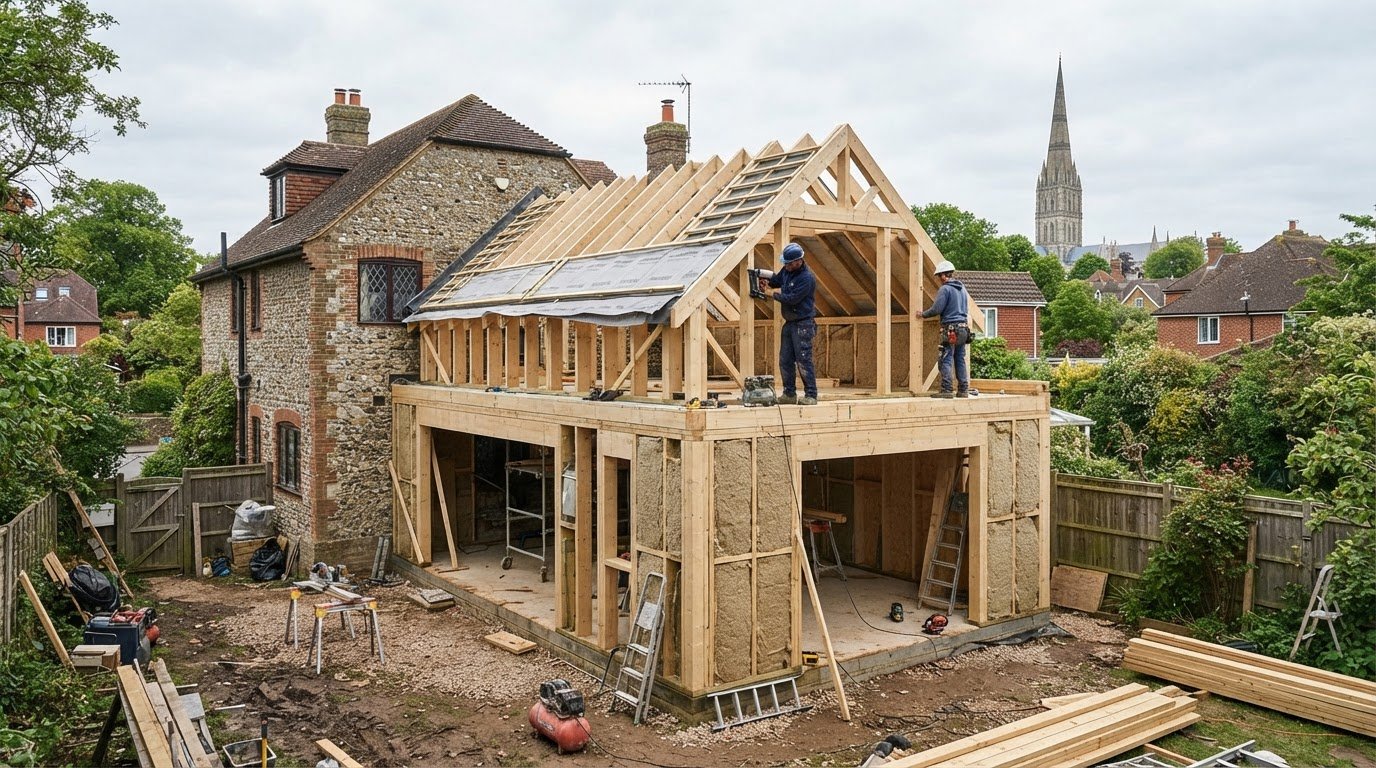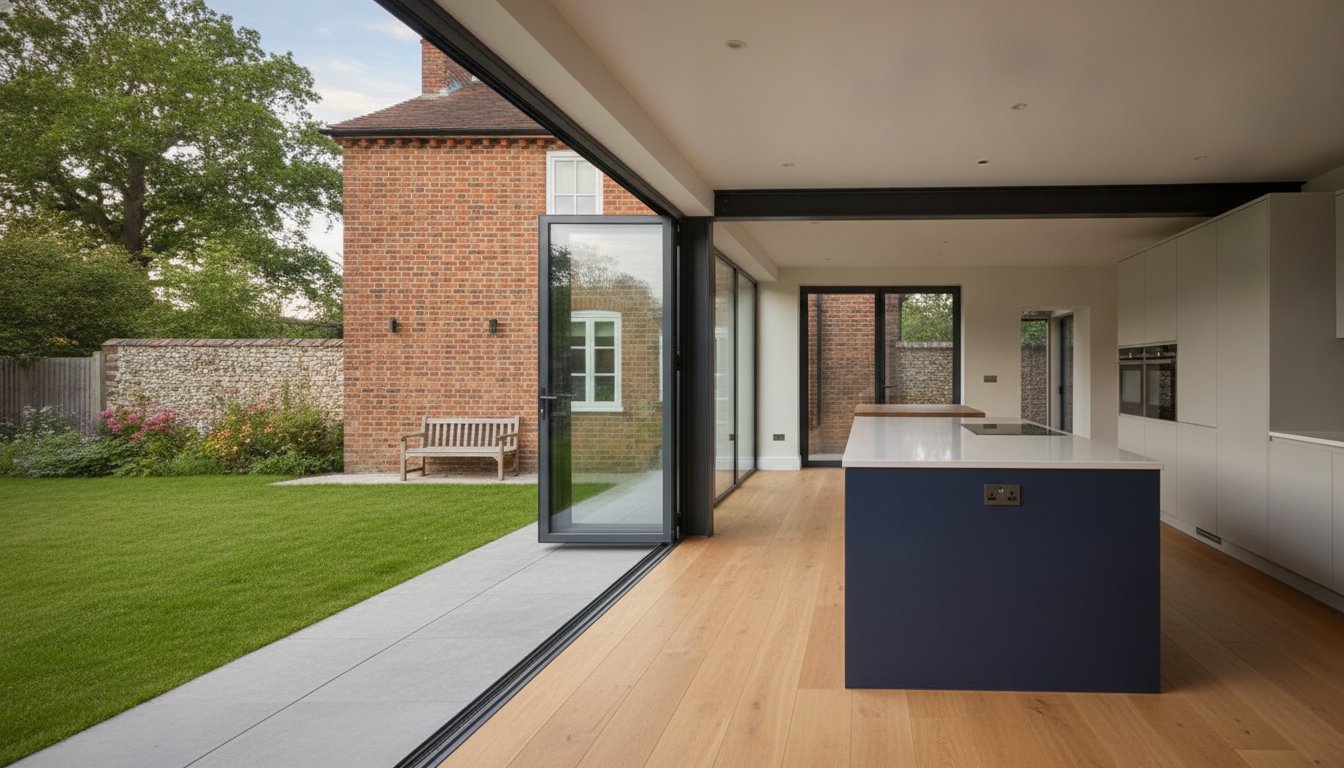
What if your kitchen extension didn’t look like a modern afterthought, but felt as though it had been part of your home’s original blueprint since the day it was built? For many homeowners, the dream of a light-filled family hub is often clouded by the fear of creating a clashing “bolt-on” or the technical headache of navigating planning permission versus permitted development. It’s a significant undertaking, and it’s natural to feel concerned about structural integrity when removing load-bearing walls or matching heritage brickwork. This guide provides the most inspiring kitchen extension ideas UK residents are using in 2026 to create functional, seamless spaces that truly add value.
You’ll discover how to achieve a perfect balance between open-plan living and the newer trend for “broken-plan” zones, all whilst ensuring your project complies with the latest building regulations. We’ll examine the structural realities of steel beam installations and the importance of professional bricklaying for a flawless finish. By the end of this article, you’ll have a clear roadmap for transforming your home into a bright, multi-functional space that integrates perfectly with your existing property and meets your family’s needs for years to come.
Key Takeaways
- Explore the shift from open-plan to “broken-plan” layouts that use internal alterations to create distinct, multi-functional zones for cooking and socialising.
- Compare the most effective kitchen extension ideas UK homeowners can use to maximise space, such as side-return extensions for narrow terraces or expansive rear additions.
- Learn how to avoid a clashing “bolt-on” appearance by prioritising architectural harmony through expert bricklaying and the careful sourcing of matching heritage materials.
- Understand the crucial differences between Permitted Development rights and mandatory planning permission to ensure your project meets all UK building regulations.
- Discover why partnering with a seasoned local builder is essential for managing complex structural work, such as steel beam installations, to ensure a seamless integration with your home.
Trending Kitchen Extension Ideas for UK Homes in 2026
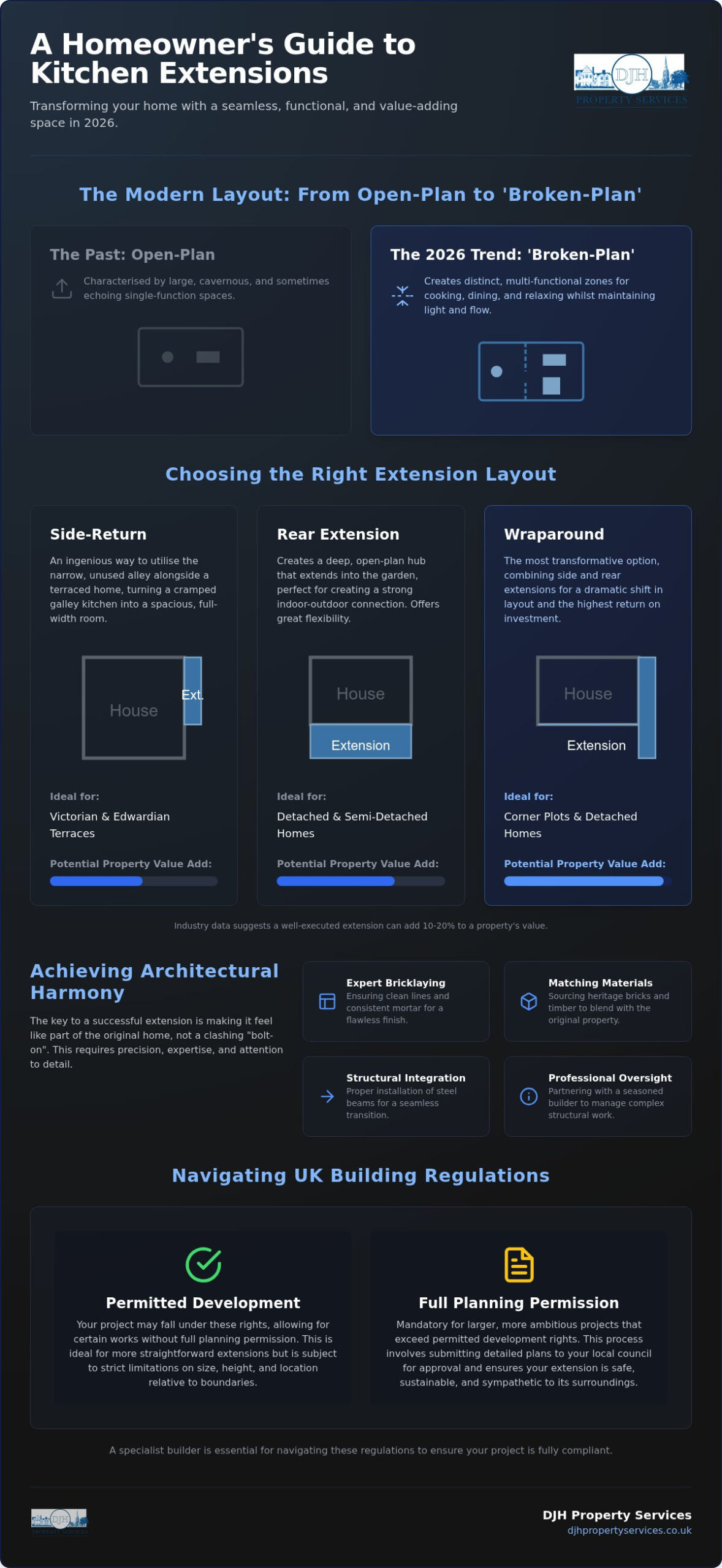
The process of improving a structure has evolved significantly over the last few years. Homeowners are moving away from cavernous, echoing open-plan spaces. Instead, “broken-plan” living is the leading trend for 2026. This approach uses internal alterations to create distinct zones for cooking, dining, and relaxing without losing the sense of light. Low-level walls, internal glazing, or subtle floor-level changes allow a family to be together whilst enjoying their own dedicated spaces. It’s about creating a home that works for every member of the household, regardless of the time of day.
Modern kitchen extension ideas UK now prioritise multi-functional islands. These aren’t just for food prep anymore; they’re designed with integrated power points and ergonomic seating to serve as work-from-home hubs. To keep these spaces feeling airy, many are looking upwards. Vaulted ceilings and exposed rafters are a favourite for 2026, creating a sense of volume that a standard flat roof simply cannot match. Large-scale bi-fold or Crittall-style doors remain essential, effectively turning the garden into a seasonal extension of the living area.
The Glass Link Extension
A glass link is an elegant way to connect a heritage property to a new, modern kitchen. It acts as a transparent corridor that preserves the original character of a period home whilst flooding the interior with natural light. From a structural perspective, joining glass to traditional masonry requires precision and a deep understanding of how different materials settle over time. It creates a clear visual distinction between the old and the new, ensuring the extension doesn’t look like an awkward addition, but rather a deliberate and thoughtful evolution of the property. To ensure the interior design matches this architectural ambition, many homeowners turn to tilesandstonedirect.co.uk for premium tiling and flooring solutions that create a unified look across the new layout.
Industrial and Raw Material Aesthetics
Raw materials are no longer hidden behind plasterboard. Exposed brickwork and structural steel beams have become central design features in their own right. This aesthetic demands exceptional craftsmanship. When the masonry is the final finish, the quality of the bricklaying must be perfect, with clean lines and consistent mortar. We’ve found that exposed steels can be beautifully softened with bespoke carpentry and natural timber accents. This blend of industrial strength and organic warmth creates a kitchen that feels both established and contemporary, reflecting a high standard of craftsmanship throughout the build. For those looking for design inspiration from specialists in high-end home transformations, the work of River City Construction Inc provides excellent examples of how technical precision can transform residential spaces.
Choosing the Right Layout: Side-Return, Rear, or Wraparound Extensions
Selecting the correct layout is the most critical decision in any project. Your house type, whether it’s a semi-detached property or a detached home, largely dictates what is possible under UK building regulations. Side-return extensions are an ingenious way to utilise the narrow, unused “alley” alongside Victorian or Edwardian terraces. This layout turns a cramped galley kitchen into a spacious, full-width room without sacrificing much of the garden. Detached properties often offer the greatest flexibility, allowing for wider wraparounds, whereas semi-detached homes must carefully consider the impact on the shared boundary.
For those with more space, a rear extension creates a deep, open-plan hub that flows directly into the garden. However, for a truly transformative result, a “wraparound” extension combines both side and rear additions. While some suggest side-returns are more cost-effective, a wraparound offers a superior long-term return on investment. Industry data from Lynch Brother Homes in April 2026 suggests a well-executed extension can add 10-20% to a property’s value, and a wraparound provides the most dramatic shift in layout. This is one of the most ambitious kitchen extension ideas UK homeowners can undertake, as it often requires significant structural alterations.
Maximising a Small Kitchen Extension
Smaller footprints require clever design to avoid a dark or cramped atmosphere. Roof lanterns and skylights are essential tools; they draw light deep into the room, preventing the “tunnel” effect often found in narrow extensions. Every centimetre counts, so we often recommend bespoke carpentry and integrated storage to keep floor space clear. For those in single-storey homes, a bungalow extension Salisbury guide can show you how to effectively double your kitchen footprint through smart structural changes that maximise existing land.
Large Scale Open-Plan Alterations
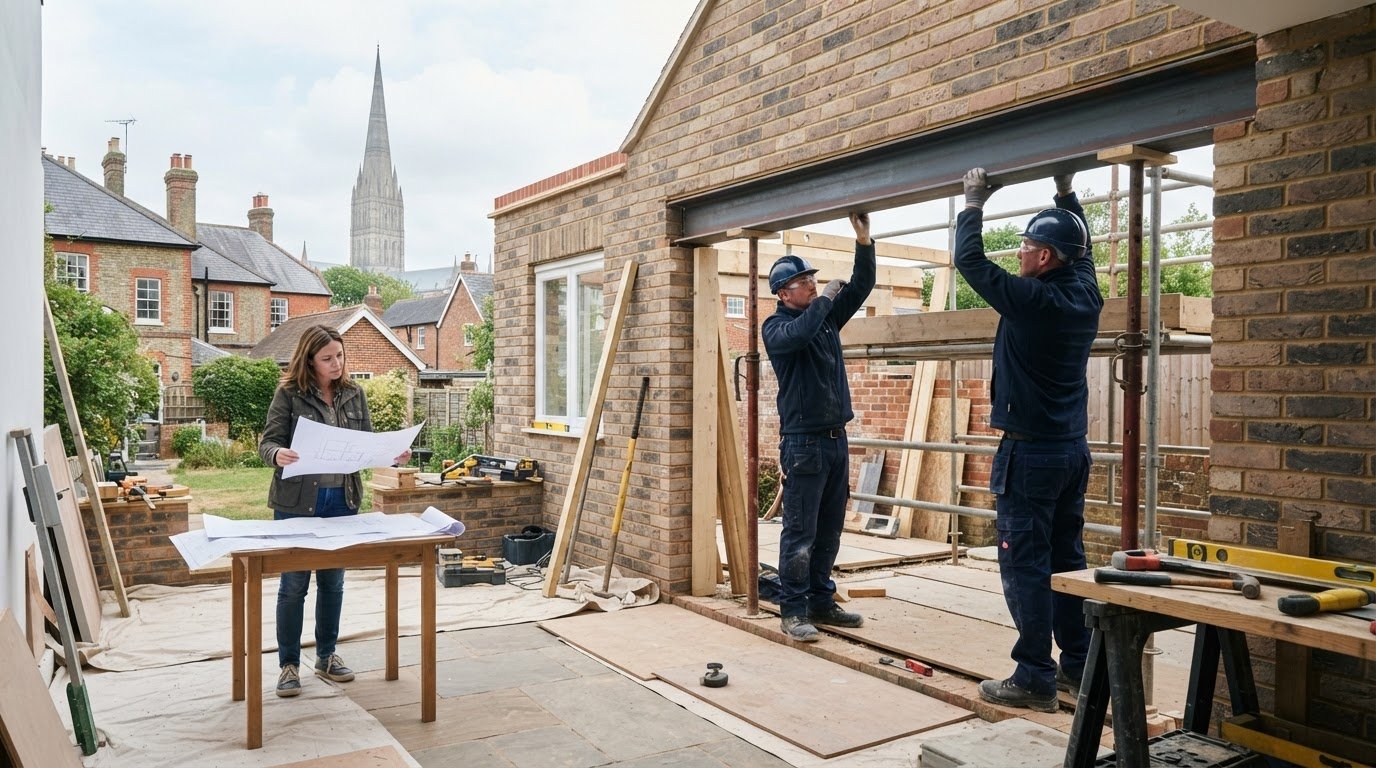
Creating a seamless kitchen-diner usually involves removing internal load-bearing walls. This is a complex task that relies on precise steel beam installations to support the weight of the upper floors across wide, column-free spans. Once the structural shell is secure, planning the internal flow becomes the priority. Positioning a utility room or a hidden pantry away from the main social hub keeps the kitchen uncluttered. If you are planning a project of this scale, it is worth consulting with specialist local builders who understand the unique structural challenges of regional property types.
Architectural Harmony: Matching New Brickwork and Carpentry to Your Existing Home
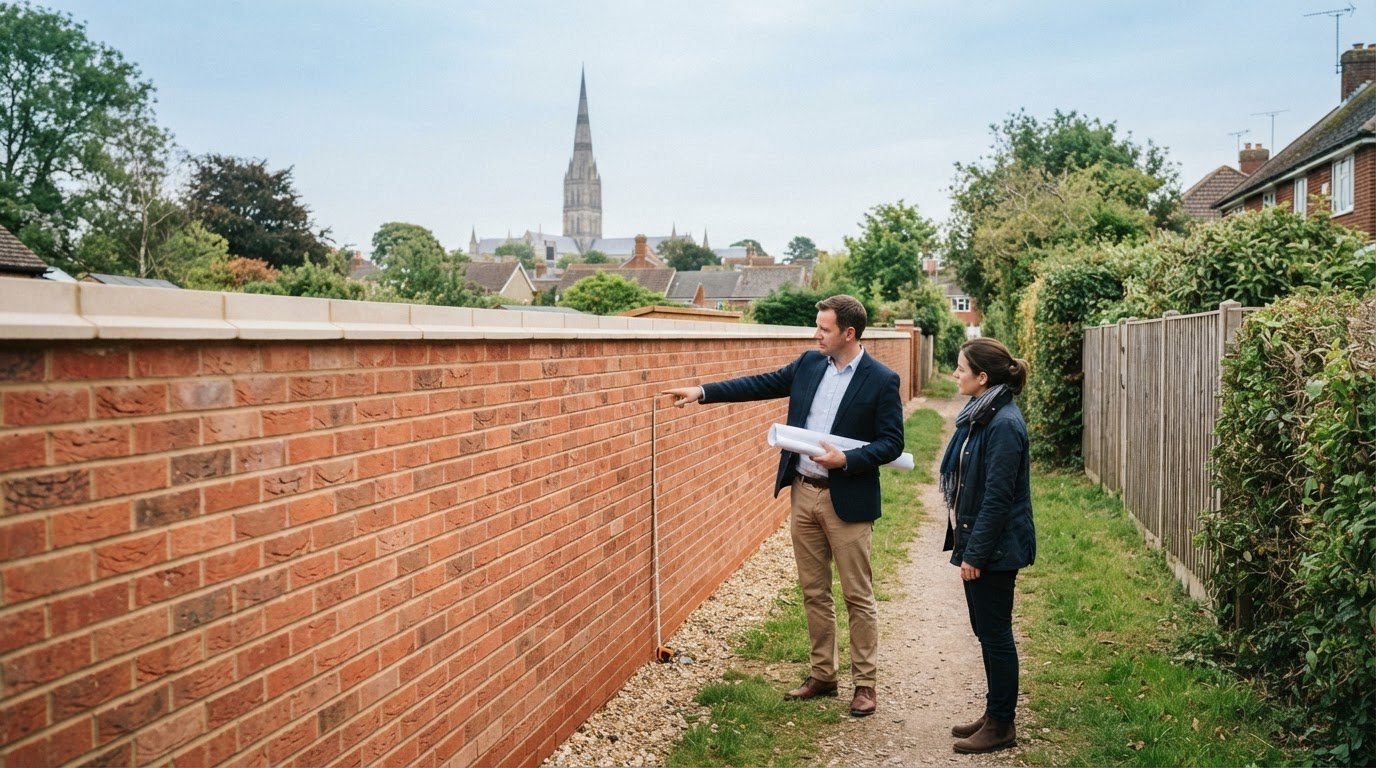
Achieving a seamless finish is what separates a professional build from a clashing “bolt-on” addition. When researching kitchen extension ideas UK homeowners often overlook the technical precision required to make a new structure look like it has always been there. True success lies in the details. This involves sourcing bricks that match the colour and texture of the original masonry and selecting mortar tones that mirror decades of weathering. Beyond materials, the layout of the bricks themselves matters. Using traditional bricklaying techniques to replicate decorative bonds, such as Flemish or English bonds, ensures the new walls are a perfect continuation of the old.
Roofline integration is another critical factor in maintaining architectural design and harmony. A jarring roof pitch or a mismatch in tile materials can ruin the silhouette of a property. Whether your home uses reclaimed slate or specific clay tiles, the extension should adopt the same materials and angles. Bespoke carpentry plays a vital role here too. Standard off-the-shelf windows often look out of place in a period home. Custom-made timber frames or high-quality aluminium alternatives can be designed to match the proportions and sightlines of your original windows, creating a unified aesthetic across the entire ground floor.
Extending Period and Victorian Properties
Older homes present unique challenges, particularly regarding masonry and shallow foundations. Victorian properties were often built to “breathe” using lime-based mortars and solid walls. It’s vital that a new extension respects this characteristic to prevent damp issues. We focus on integrating modern insulation standards and high-performance glazing whilst preserving the character features that define the house. This requires a methodical approach to structural alterations, ensuring that the connection between the 19th-century original and the 21st-century addition is both robust and visually sympathetic.
Quality Finishes with Skilled Trades
Professional bricklaying is the literal foundation of a high-value extension. When the external finish is flawless, it adds significant kerb appeal and long-term value to your property. Internal carpentry is equally important, moving from the structural necessity of floor joists to the refined finish of bespoke kitchen fitting. Our approach to home extensions Salisbury is built on over 50 years of industry experience. We believe that craftsmanship should never be compromised, as it’s the quality of the skilled trades involved that determines the longevity and feel of your new space.
Navigating UK Building Regulations and Planning for Kitchen Extensions
Understanding the legal framework is just as vital as the design phase. Many homeowners assume that the most ambitious kitchen extension ideas UK are automatically covered by Permitted Development (PD) rights. For detached houses, you can often extend up to 8 metres, whilst semi-detached properties are restricted to 6 metres. However, these rights are subject to specific height limits; a single-storey extension must not exceed 4 metres. If your project exceeds these dimensions or involves a significant change to the property’s footprint, a full planning application is mandatory.
Building Regulations are a separate, non-negotiable requirement. These rules ensure your home remains safe, energy-efficient, and structurally sound. They cover essential aspects such as fire safety partitions, adequate ventilation, and thermal insulation. Additionally, if your build sits on or near a boundary, you must comply with the Party Wall Act. This legal requirement involves serving notice to your neighbours and, in some cases, appointing a surveyor to prevent future disputes over shared structures.
Structural Feasibility and Steelwork
Removing load-bearing walls to create the open-plan layouts discussed earlier requires a structural engineer’s expertise. They provide the precise calculations needed for steel beam installations. These steels must rest on concrete padstones to distribute the weight safely across your existing masonry. Foundations must also be assessed; modern standards often require deeper footings than those found in older properties to support the increased structural load of a modern kitchen extension.
Working within Salisbury Conservation Areas
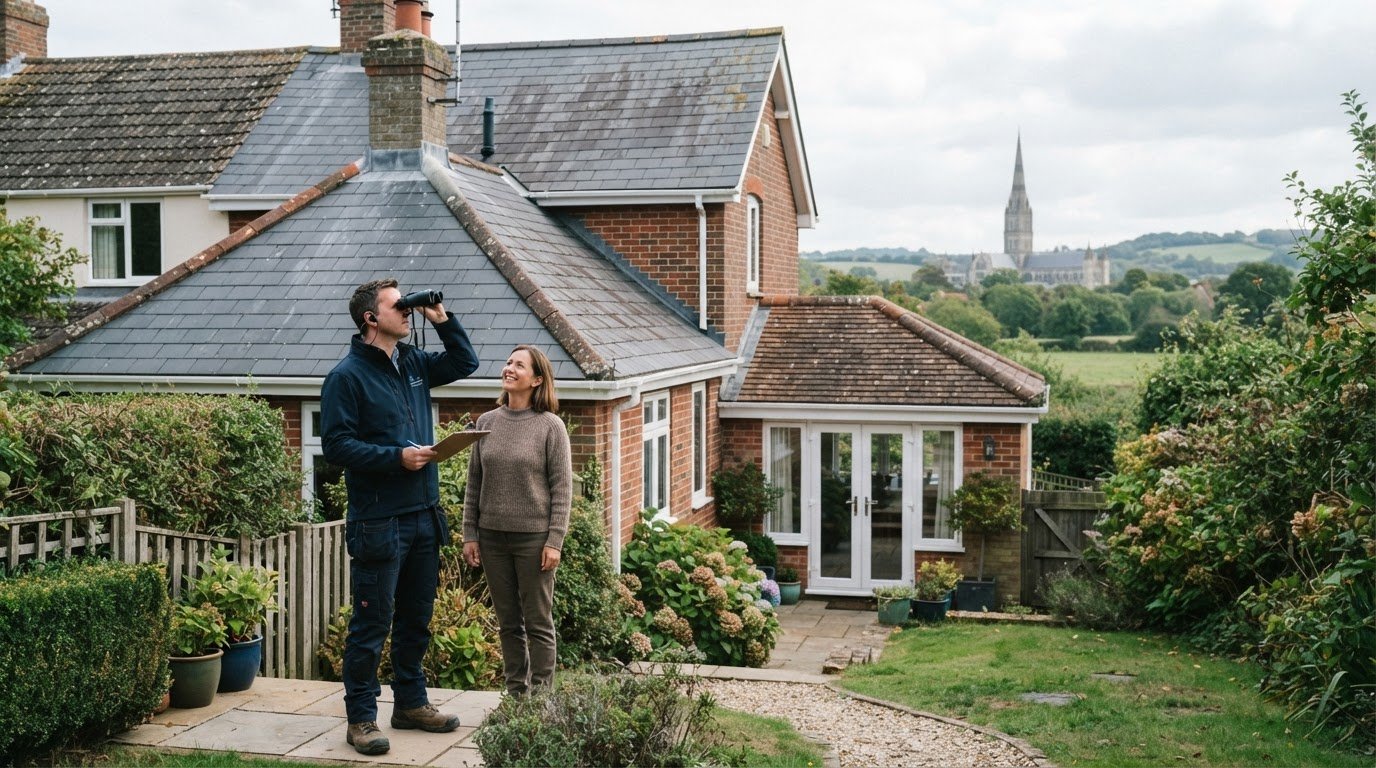
Historic Wiltshire centres like Salisbury have stringent rules regarding the preservation of heritage character. In these conservation areas, Permitted Development rights are often restricted. Planning officers will scrutinise your choice of materials to ensure they complement the local vernacular. Partnering with an experienced local construction builder ensures you have a partner who understands these regional nuances. If you are ready to discuss the feasibility of your project, you can contact our team for professional guidance.
From Concept to Construction: Selecting a Specialist Builder in Salisbury
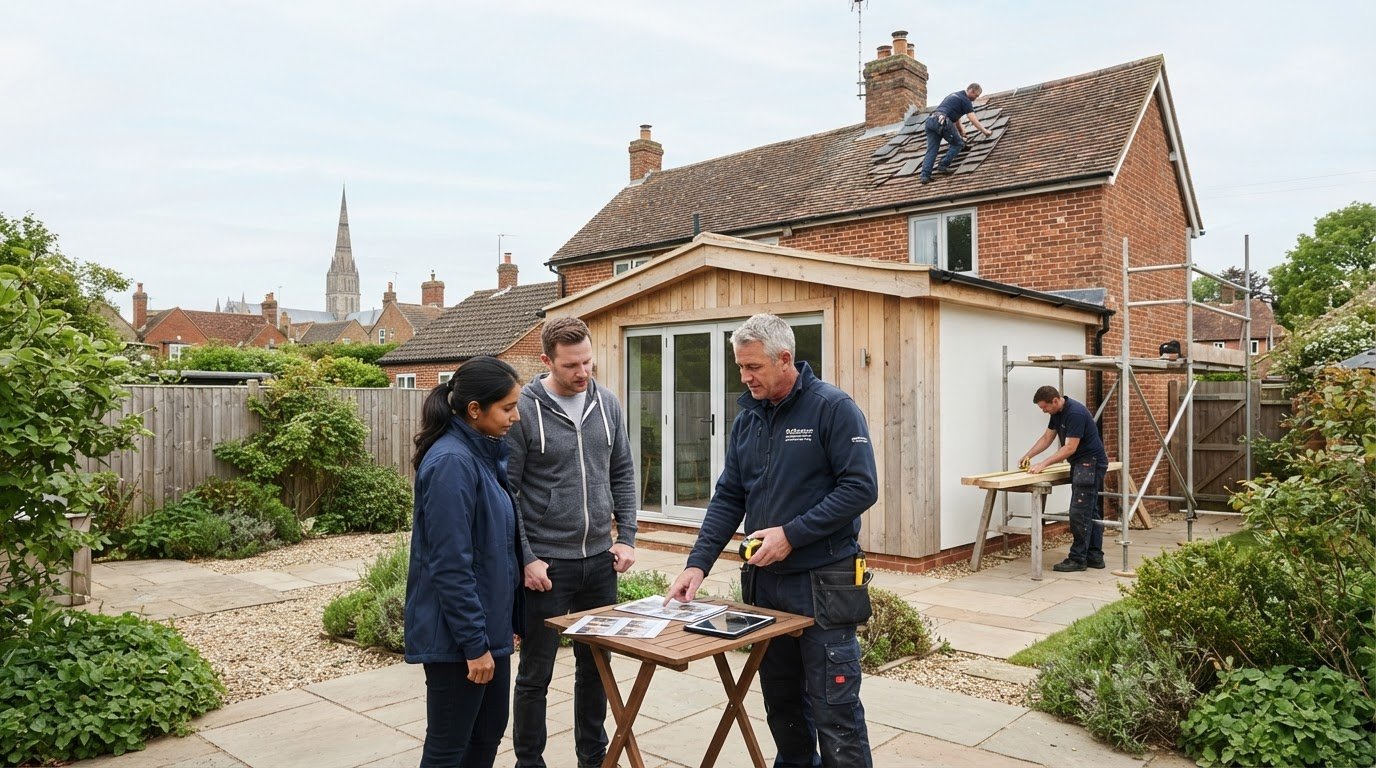
Salisbury properties, particularly those near the historic centre or within Wiltshire’s conservation areas, require a specific level of expertise. Whether it’s navigating the flint and stone of older builds or sourcing the specific clay bricks used in Victorian terraces, local knowledge ensures a smooth, compliant build. The value of a professional quote lies in its depth of detail. It should clearly distinguish between provisional sums and fixed costs, providing a transparent breakdown of material expenses and the labour of skilled trades. You should also prepare for the first few weeks of construction, which involve site clearance, excavations, and the establishment of foundations that meet modern standards.
The DJH Property Services Difference
Our focus remains strictly on residential construction and high-quality property alterations. By employing our own skilled bricklayers and carpenters, we maintain total control over the finish of every project. We don’t just build; we ensure every new structure meets the same rigorous property maintenance Salisbury standards we apply to our long-term care contracts. If you also manage larger commercial or industrial facilities where cleanliness is paramount, you can find out more about specialist hygiene services. Our team takes personal pride in every course of bricks laid and every timber joint cut. This commitment to traditional craftsmanship is why we’ve remained a trusted local authority for half a century, treating every extension as a lasting evolution of your home.
Transitioning from kitchen extension ideas UK to a fixed-price building quote starts with a thorough review of your architectural plans. We encourage an open, professional dialogue to discuss your 2026 extension goals and any specific structural requirements, such as the steel beam installations discussed in previous sections. Once your plans are ready for review, we can provide a detailed breakdown of the work required. This methodical approach ensures that the vision on paper is translated into a functional, light-filled reality without the stress of hidden surprises or escalating costs during the construction phase. Once your extension is complete, you might consider professional media to document the result; for example, the portfolios at Houzpics | Real Estate Photographers in Hilton Head, SC show how expert photography can truly highlight the light and space of a new home layout.
Transforming your home requires more than just a creative eye; it demands technical precision and a deep respect for the existing structure. We’ve explored how the most successful kitchen extension ideas UK homeowners choose for 2026 are those that prioritise architectural harmony through matched brickwork and expert carpentry. Whether you’re planning a subtle side-return or a dramatic wraparound, understanding the balance between Permitted Development rights and structural requirements like steel beam installations is the key to a stress-free build.
With over 50 years of industry experience in residential construction, DJH Property Services brings a level of craftsmanship that ensures your extension feels like a natural part of your home. As trusted local Salisbury builders, we specialise in the skilled bricklaying and carpentry required for both heritage and modern properties. We understand the unique challenges of Wiltshire’s conservation areas and the importance of quality finishes that stand the test of time. Contact our Salisbury building team to discuss your kitchen extension and take the first step toward a functional, light-filled family space. Your ideal home is within reach when you have the right experts by your side.
Frequently Asked Questions
Do I need planning permission for a kitchen extension in the UK?
Planning permission isn’t always required if your project meets Permitted Development criteria. Single-storey rear extensions can often reach up to 8 metres for detached homes or 6 metres for semi-detached properties, provided they don’t exceed 4 metres in height. However, those in conservation areas or with listed buildings will face stricter rules. We always recommend obtaining a Lawful Development Certificate to provide formal proof that your building work was legally permitted at the time of construction.
How much value does a kitchen extension add to a UK home?
A well-executed extension can add between 10% and 20% to your property’s total value, according to 2026 industry reports. The exact return depends on the quality of the finish and how well the new layout integrates with the original house. When considering kitchen extension ideas UK homeowners should prioritise structural harmony and high-quality materials. A seamless addition that feels like an original part of the property typically yields the highest long-term financial reward.
What is the difference between a side-return and a rear extension?
A side-return extension occupies the narrow “alley” space alongside the rear of a Victorian or Edwardian terrace, effectively widening the existing galley kitchen. A rear extension pushes the back wall of the house further into the garden, creating a deeper room. Whilst side-returns are excellent for maximizing internal width without losing garden length, a rear extension offers more potential for expansive, open-plan living and large-scale glazing installations like bi-fold doors.
How long does a typical kitchen extension take to build?
Most mid-sized projects take between 12 and 16 weeks to complete from the first excavation to the final kitchen fit-out. The initial groundworks and foundation stage typically occupy the first three weeks, followed by the structural shell and roof. Internal alterations, such as steel beam installations and plumbing, follow shortly after. Factors like weather conditions and the complexity of your chosen kitchen extension ideas UK will influence the final timeline for your specific build.
Can I stay in my house whilst the kitchen extension is being built?
You can certainly remain in your property during the construction phase, though it requires careful planning. We use dust screens and temporary partitions to keep the living areas clean and secure. Many clients set up a temporary kitchen in another room to maintain a level of normality. However, during major structural work or when the existing rear wall is removed, some homeowners find it more comfortable to stay elsewhere for a week or two.
How do I match the bricks of my new extension to my old house?
Matching bricks involves sourcing from specialist merchants who can identify the specific clay type, texture, and size used in your original masonry. The mortar colour is equally important; we often use specific sand blends to mirror the weathered look of older joints. Beyond the materials, the bricklayer must replicate the original bonding pattern, such as a Flemish bond, to ensure the new wall blends perfectly with the heritage character of your home.
What are the building regulations for removing a kitchen wall?
Removing an internal wall requires a structural engineer to calculate the necessary support, which usually involves a steel beam installation. These calculations must be submitted to Building Control for approval. The regulations also focus on fire safety, ensuring that any structural steel is adequately protected, and that the new layout doesn’t compromise escape routes or ventilation. An inspector will visit the site at key stages to verify that the work meets these mandatory safety standards.
Is a kitchen extension cheaper than moving to a larger house?
Extending is frequently more cost-effective than moving, especially when you factor in Stamp Duty, legal fees, and estate agent commissions. These “sunk costs” can often total tens of thousands of pounds without adding any tangible value to your life. By investing that capital into an extension instead, you avoid the stress of a house hunt and gain a bespoke space designed specifically for your family’s lifestyle and long-term requirements.